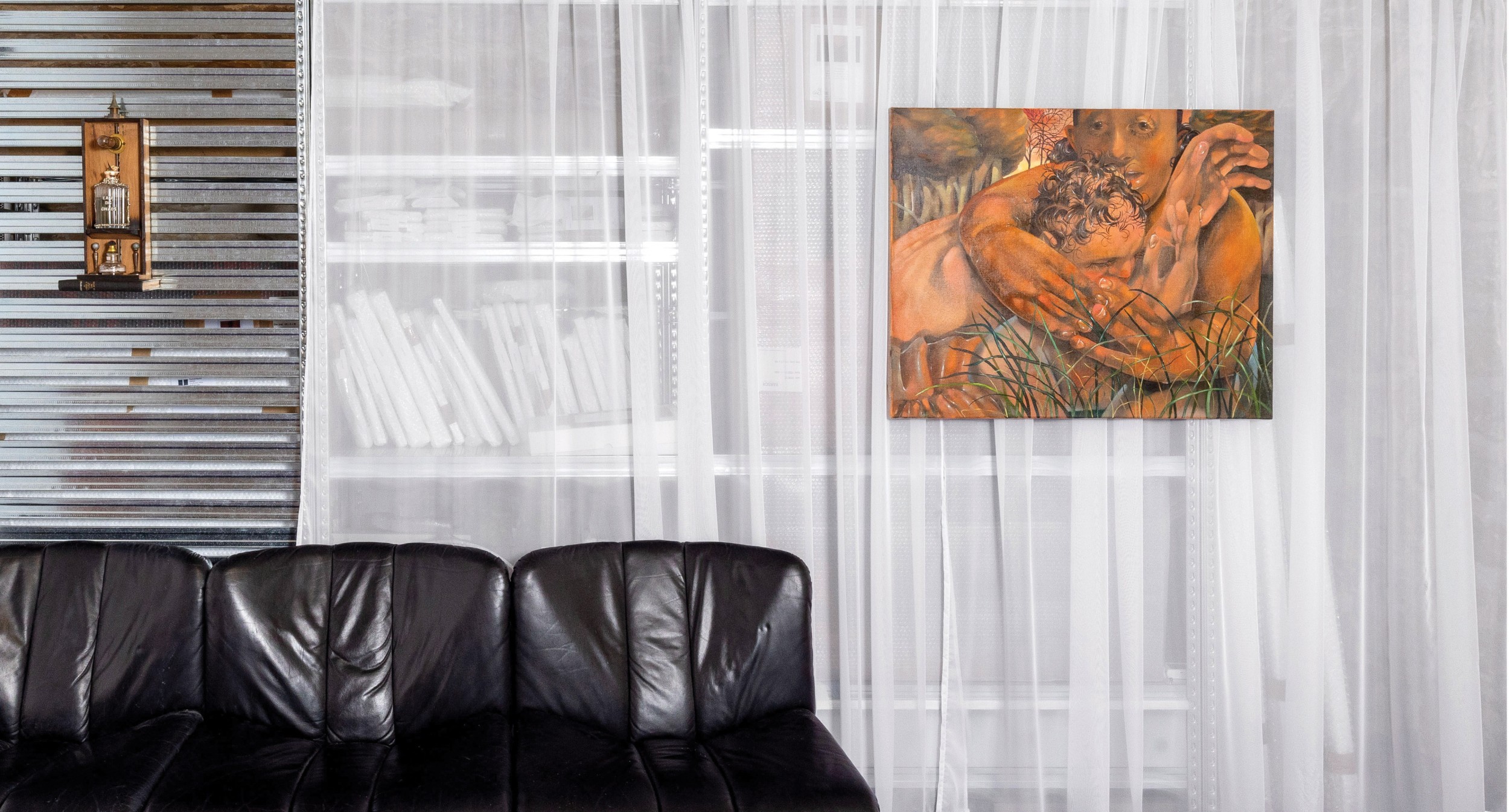
Le salon | “Chambre d'échos, Chapitre I”
Exhibition
27.11.2024 — 21.12.2024
Camille Bernard
Youri Johnson
Avery Z. Nelson
Simon Petepiece
Andrei Pokrovskii
Opening
27.11.2024 — 17h
Resonate, to hear oneself through the entirety of this long night. A recurrence—that is how she remembers it. Not to forget the one who loves more than herself. To repeat with a head full of words of love that cannot come out. Just to repeat.
Echo—she loves, restrained, punished, yet still speaking within herself. Punishment for having spoken too much? A note in a school logbook—you always return to it. Reduced to her voice, which loves and eventually dissolves into elsewhere.
Here, lying down, the landscape slowly fades, the sun melts, and sound crumbles.
The echoes are plural.x.les, they move and bind together—how can they be separated? Is it still us who speak, or does Echo begin to decide once she becomes inaudible? Our cries, our words, our whispers—all belong to Echo. When we lose them, she retrieves them, keeps them, alters them. She has a chest of words: someone said, “Where are you?” Echo repeated it until speaking so softly—she whispered, “Right here.” No one heard, and in any case, no one is looking for her anymore.
Repetition creates comfort, a home.
The salon becomes one through the repetition of the scenes that unfold within it.
Domestic because rediscovered, again and again.
This bed only becomes my bed through repetition.
Search—since Echo will find you every time.
Text by | Ulysse Feuvrier
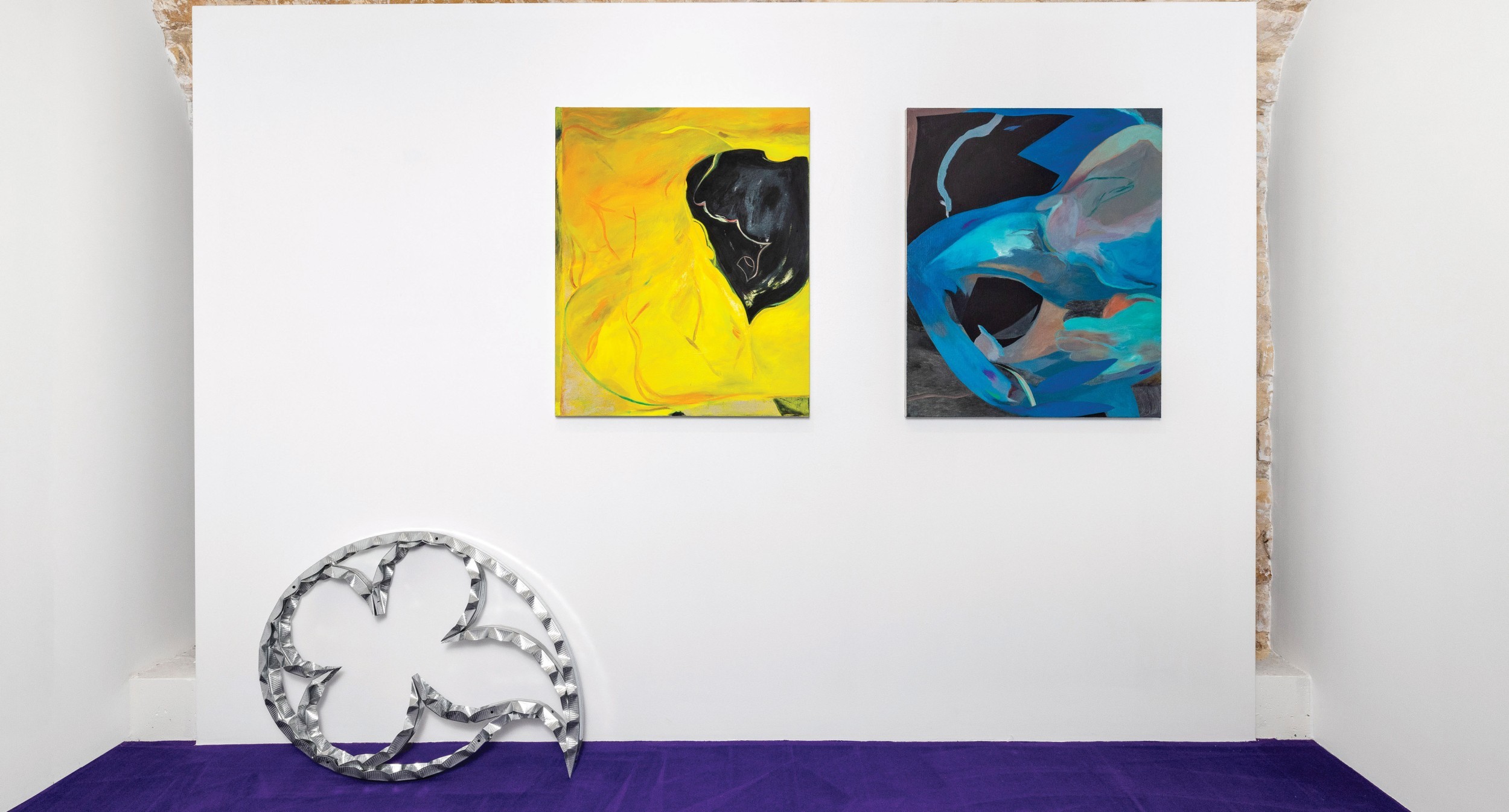
Camille Bernard (b. 1994, France) lives and works in Uzerche, France. Her practice proposes an ambivalent vision of humanity, where creatures evolve within a balance that is both sustainable and fragile, shaped by the contingencies of nature. These worlds are marked by a vocabulary of forms that, through repetition, have become emblematic of the artist’s work. Rocks, grasses, streams, stems, flowers, and human figures populate these natural elements and reappear across her canvases. They are gentle or voracious, asleep or restless, naked or hairy, existing alone or in groups.
Seemingly solid and heavy, these beings reassert a mythological presence, like shapeshifters. Through these figural compositions, the artist offers new forms of earthly nourishment—more inclusive, less gendered. Deluge, Source, Sleep, Soil, Choirs, Nest, Threshold: the environments she depicts evoke transitional spaces. Beyond a fixed, sedentary vision, the artist conveys an image of life as nomadic and in motion, where habitat is constantly reinvented and community is cherished. It is neither about building upon nature nor using it as a backdrop, but about engaging with it as a protagonist.
This interaction gradually leads human and vegetal bodies to merge and intertwine: hair becomes rope for the fragile structure of a wooden shelter; bodies burrow into moss; faces dissolve into the breath of the wind or stretch along the course of a stream. Serial composition guides her practice, and the title—often the starting point of the narrative—reflects the state of the artist’s gaze, gesture, and thought. It suggests a narrative atmosphere, each canvas acting as a fragment, a sequence.
Conceiving her work in an installation-like form, often collaboratively, Camille Bernard develops a pictorial practice that unfolds through sets, sculptures, and videos, aspiring to generate the imaginaries and narratives of a reimagined Arcadia.
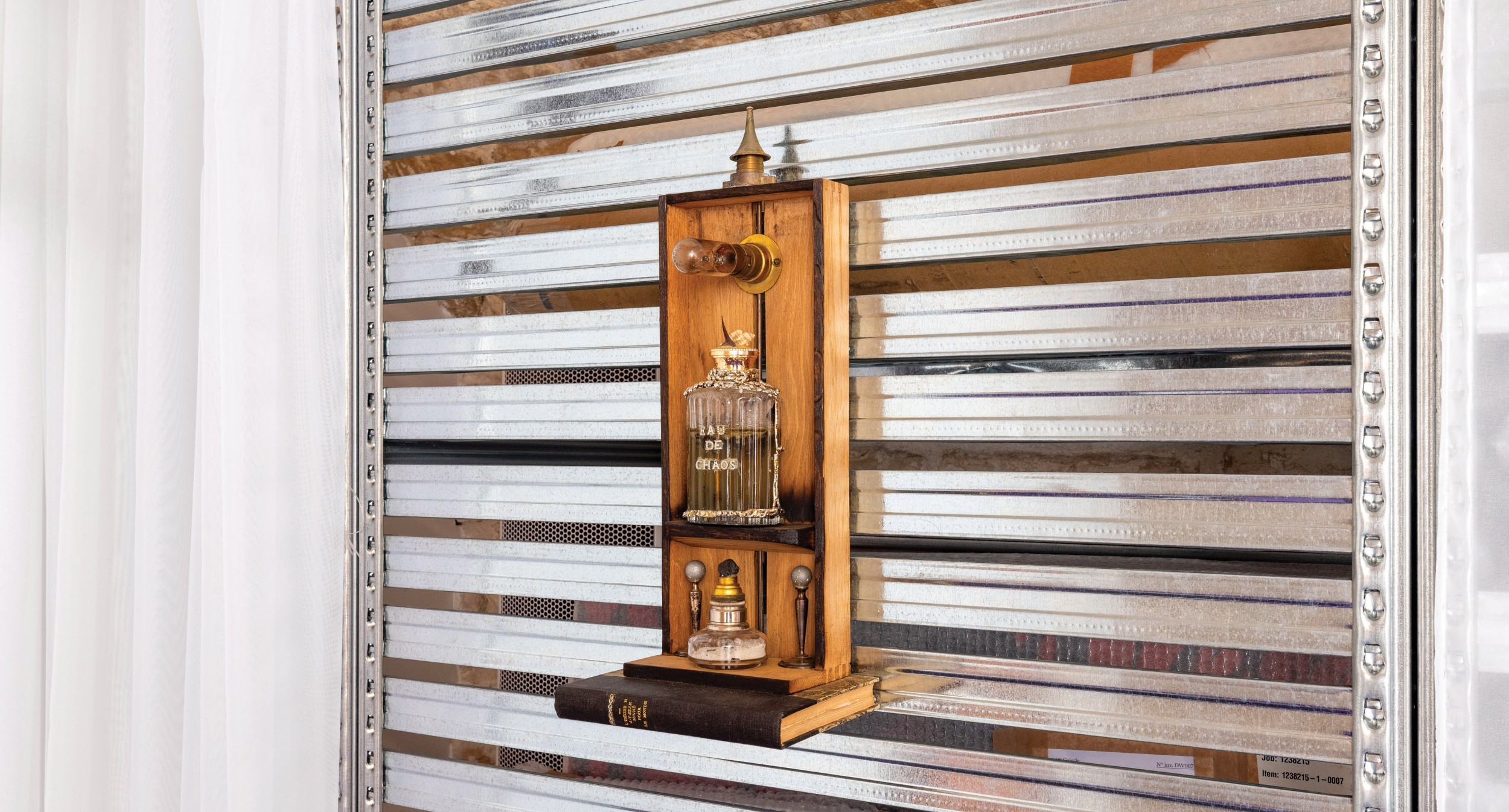
Youri Johnson is a fiction that produces fictions. Its existence is composed of poems, theoretical texts, strange objects, and more obscure elements. Together, they form a body of work entitled The Secret Art of Secret War, fragments of which have been read, published, and exhibited in various shows in France and abroad. More info
Avery Z. Nelson (b. 1983, United States) lives and works between New York, USA, and Berlin, Germany. After studying at Columbia University in New York, Nelson graduated in 2009.
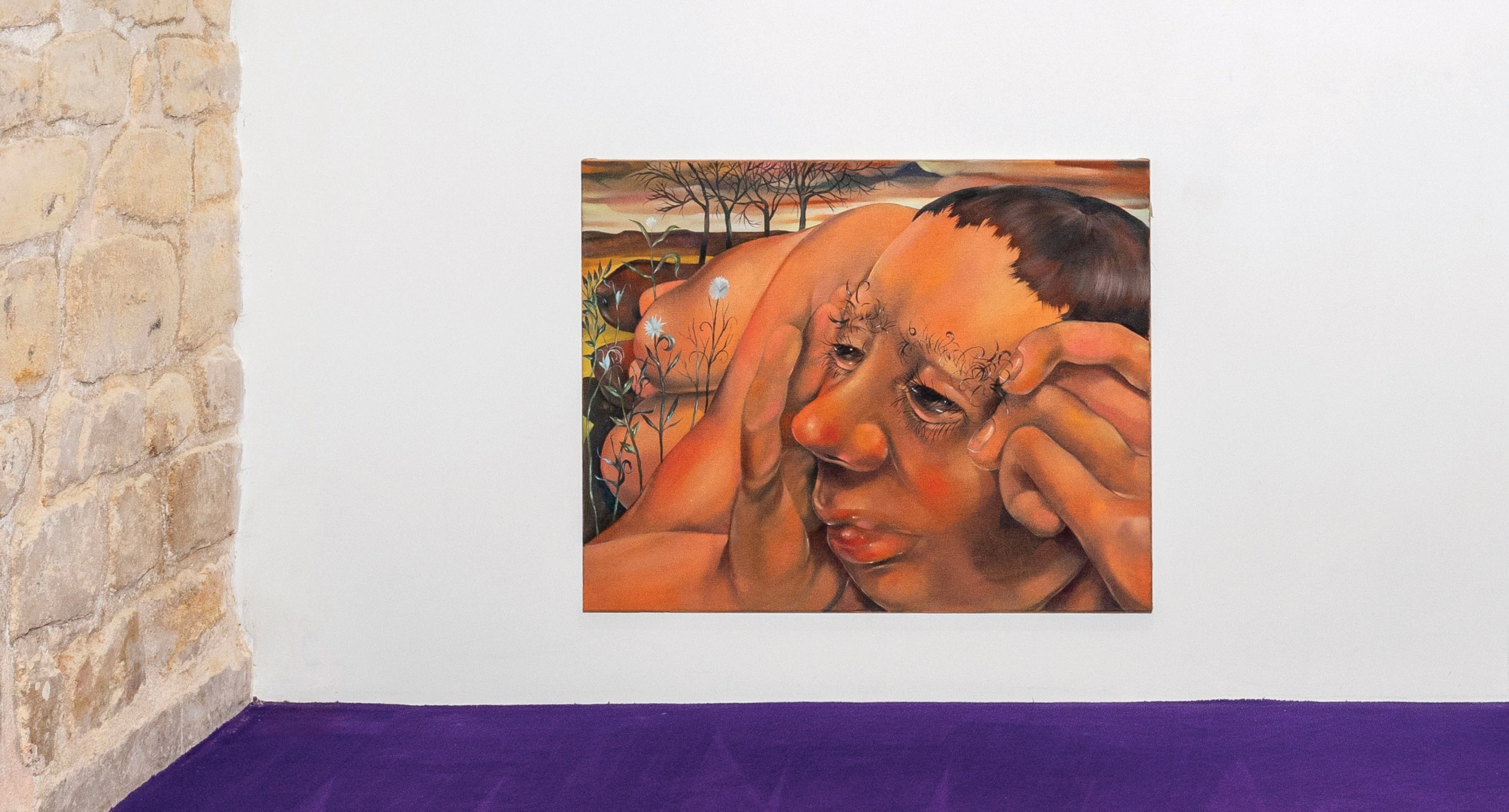
In their painterly practice, Avery Z. Nelson explores the limits of bodies in eruption and expansion. Colors and textures, curves and ruptures—body parts dissolve into landscapes, while monuments become entities in their own right. A non-binary artist, Nelson creates worlds in which each individual can inhabit multiplicity, their many “selves.”
Having experienced the bitterness of isolation, Nelson develops in their paintings poetic spaces that hold both the depth of grief and the process of becoming. Body parts merge into fields of color, destined for decomposition, vibrating between stillness and movement, figuration and indeterminacy. For years, the trans artist has explored the body as it folds into itself: the bend of a leg, the hollow of an armpit, the meeting of layers of voluptuous flesh, muscles at rest, the body in fragments.
Through the evolution of both their body and their painting, Avery Z. Nelson has developed a language of tension and release—bodies in motion, swaying, embracing; on the dance floor; feeling music through every orifice of the body. Like the fantasy of writing a poem on a napkin in a crowded queer space, sensing the weight of an alienating world, and then feeling seen, supported by a gathering of strangers who are somehow alike.
Recently, Avery Z. Nelson has presented several solo exhibitions, including in Barcelona at Nogueras Blanchard and in New York in 2023 at Blade Study Gallery and Rachel Uffner Gallery. Their work has also been included in numerous group exhibitions, notably at Para Site (Hong Kong), Mrs. Gallery (Queens), Rachel Uffner (NYC), and the DePaul Art Museum (Chicago). Nelson’s work has been featured and reviewed in publications such as The Brooklyn Rail, Artforum, Artspace, and Spike Magazine.
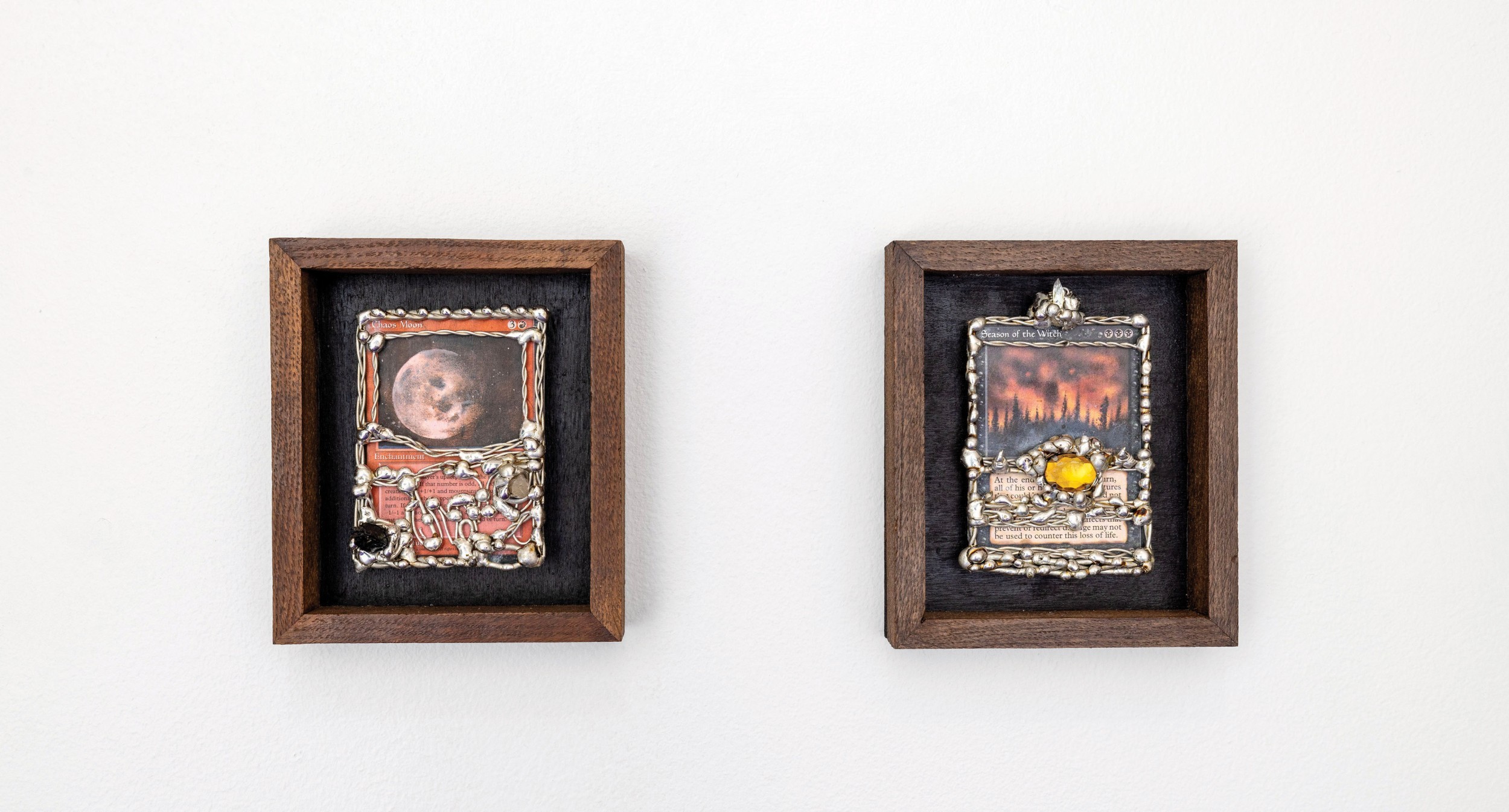
Simon Petepiece is a self-taught artist who works directly with materials and construction processes. His practice engages with the symbolic qualities of architectural spaces and draws meaning from them. By creating works that combine sculpture, painting, and drawing, he explores how the built environment bears witness to—and reflects—our cultural beliefs, values, and history. More info
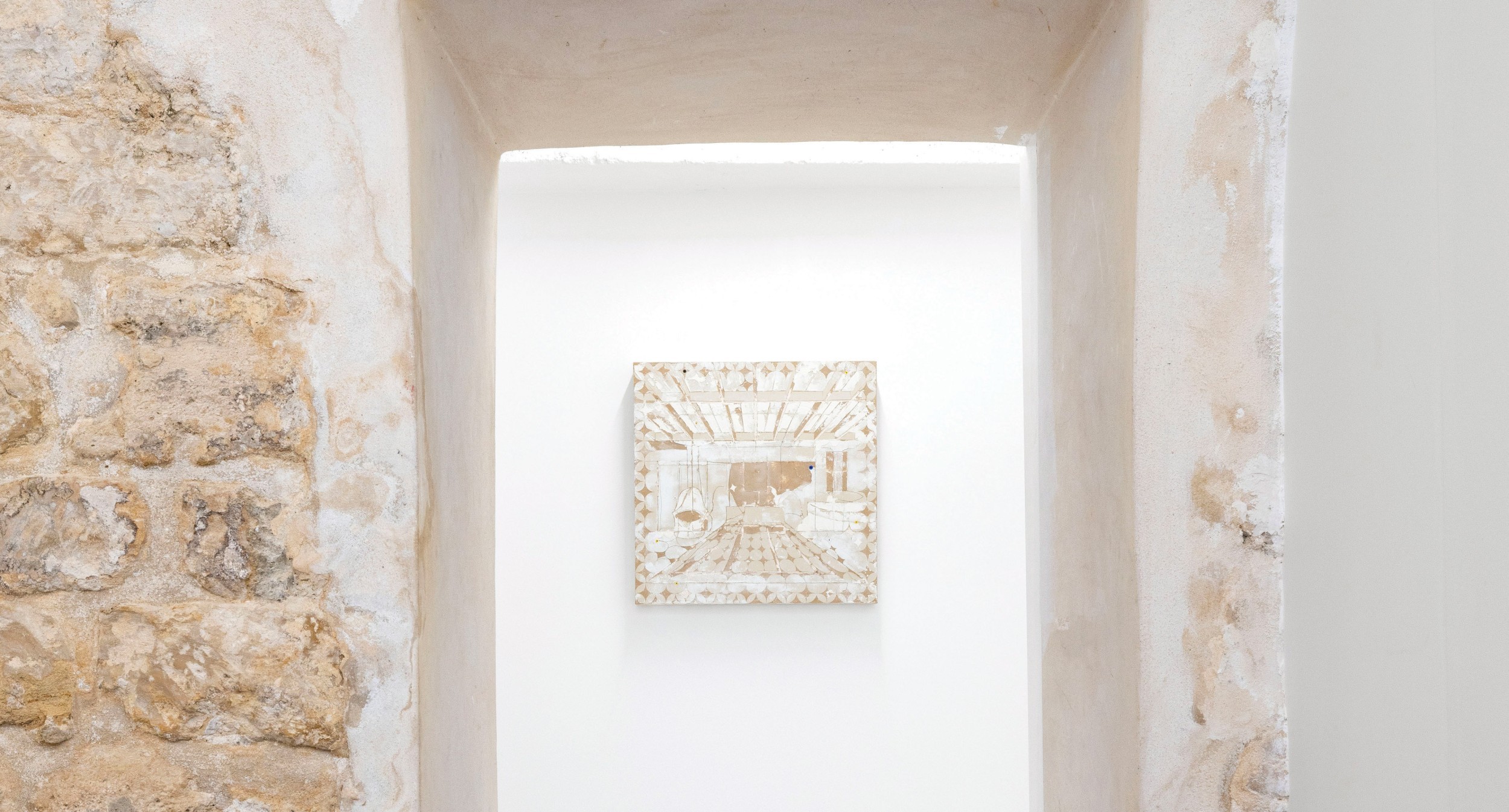
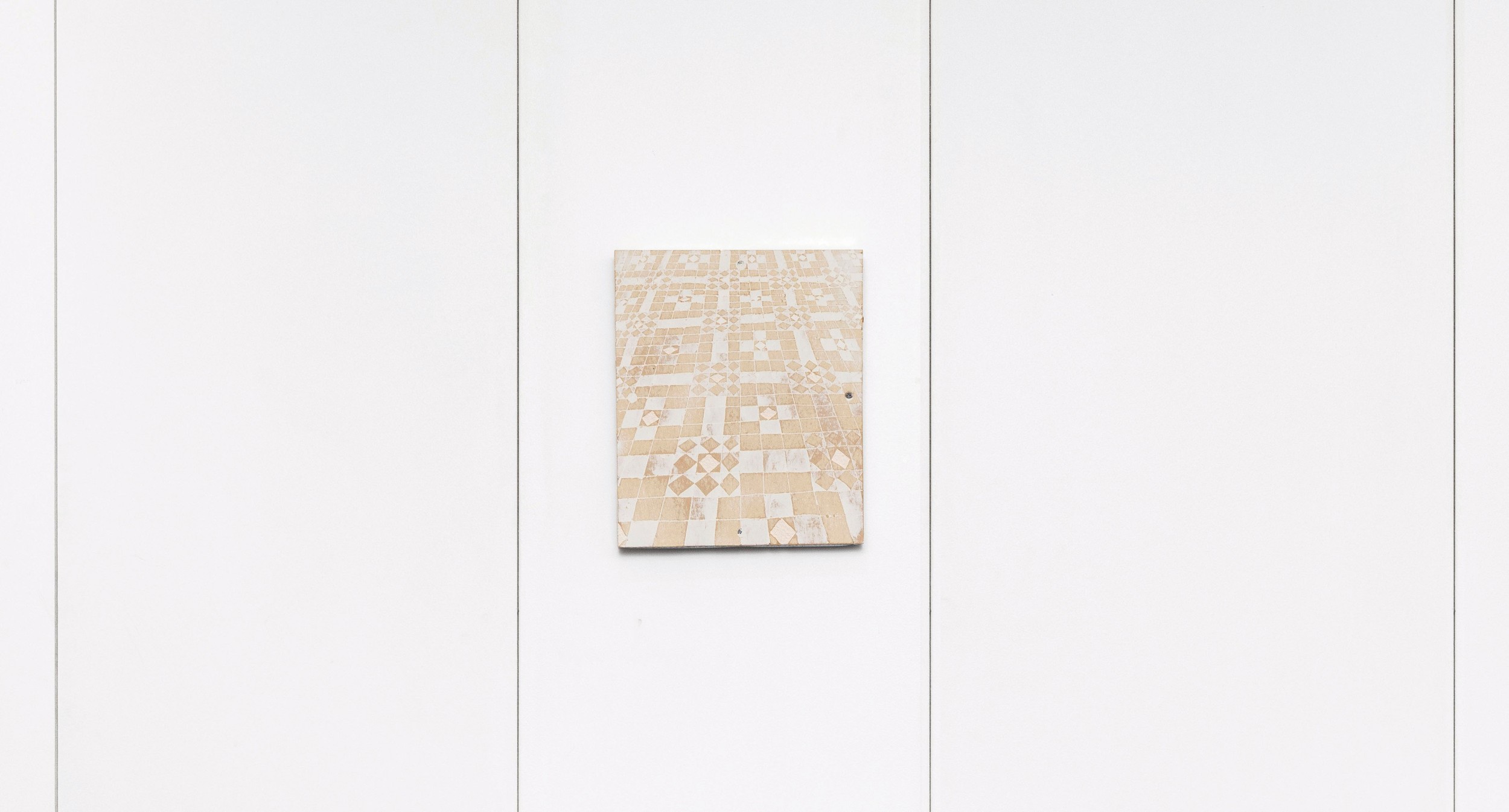
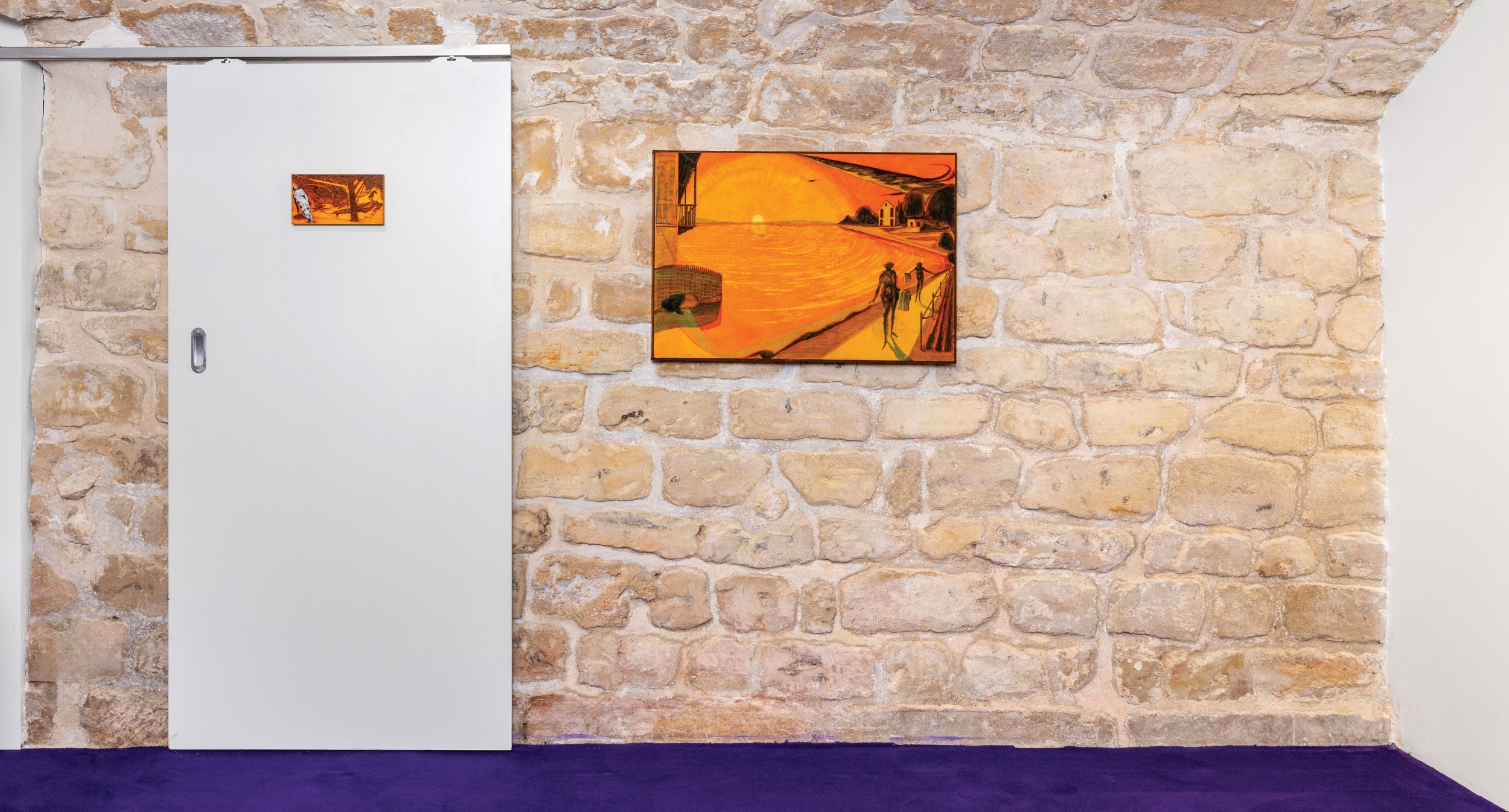
Andrei Pokrovskii (b. 1996, Russia) lives and works in London, United Kingdom. A graduate of the British Higher School of Art and Design in Moscow (2019), he left Russia to settle in London. His practice primarily focuses on representations of space and the complexity of relationships with various environments—real, mythical, or virtual.
Recreating processes of attachment to a place, Andrei Pokrovskii constructs scenes that, through the narratives unfolding within them, alter our perception of these environments. In his compositions, the setting consistently governs the figures, which function as extensions of the space itself. Their poses are distinctly static and frozen, turning them into sculptural presences that decorate both interiors and exteriors.
By adapting the subject and visual language of the painting to its surrounding environment, and by combining diverse materials with sculptural elements, Pokrovskii emphasizes the object-oriented nature of his work. In doing so, he bridges the gap between image and the viewer’s space, transforming the artwork into an artifact of the place it depicts.
Andrei Pokrovskii has exhibited internationally in both solo and group exhibitions. His solo shows include “Monasticon Universum” at Osnova Gallery in Moscow (2021) and, more recently, “Sprout” at Ribot Gallery in Milan (fall 2024), as well as group exhibitions such as “Trespassing Threshold” at ZÉRUÌ Gallery in London and “Prelude” at MAMA Projects in New York (2024). In fall 2024, Andrei Pokrovskii will present his work in Paris for the first time at DS Galerie, in the exhibition “Chambre d’échos” in the gallery’s salon space.
Contemporary Art Library, November 2024
Chambre d’échos, Chapitre I at DS Galerie
www.