Le salon | “Aparté #3 — Variations sur un motif”
Exhibition
21.02.2026 — 28.03.2026
Andrés Barón
Pierre Dumaire
Peter Marcasiano
Opening
21.02.2026 — 14h à 20h
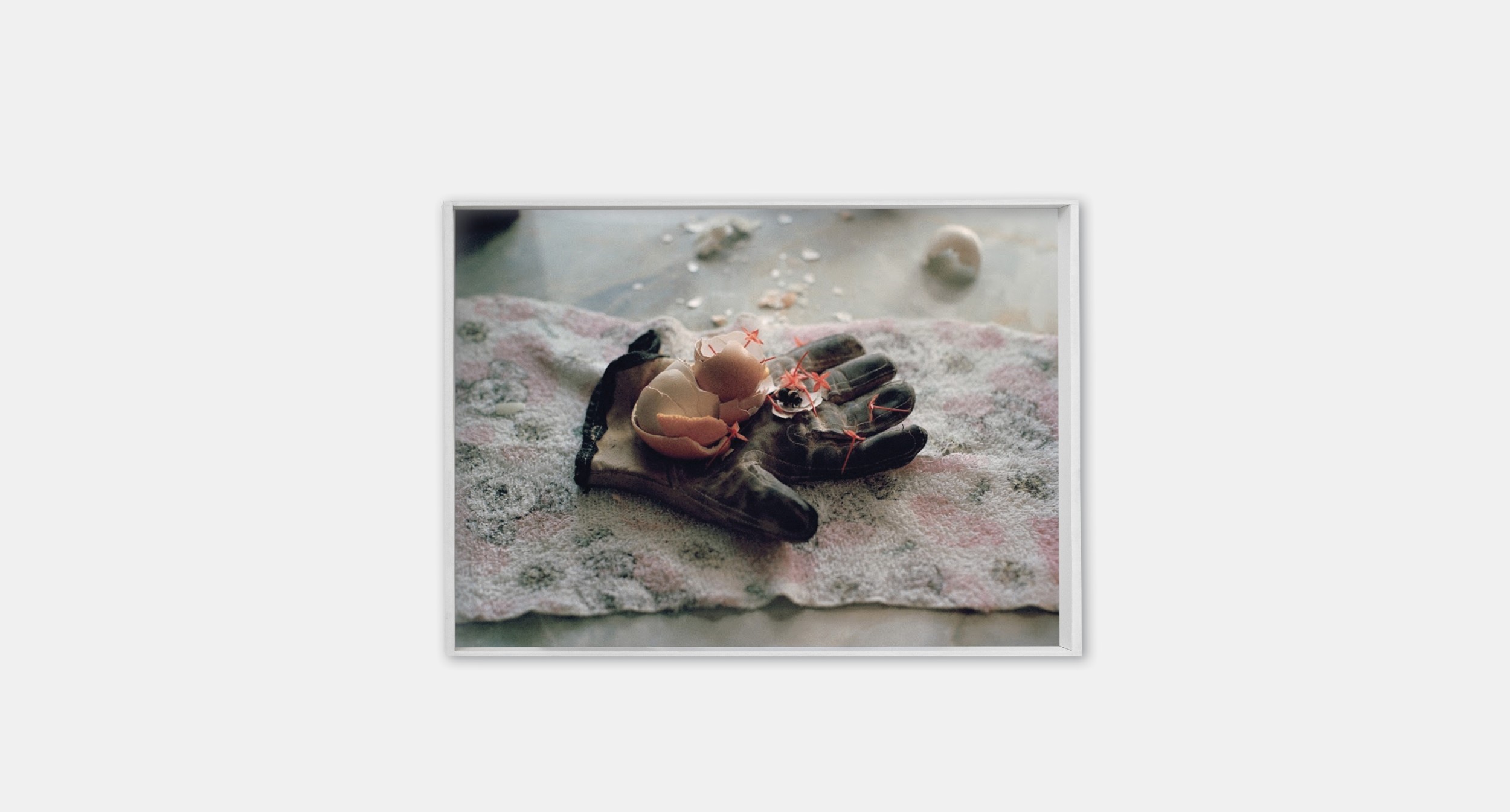
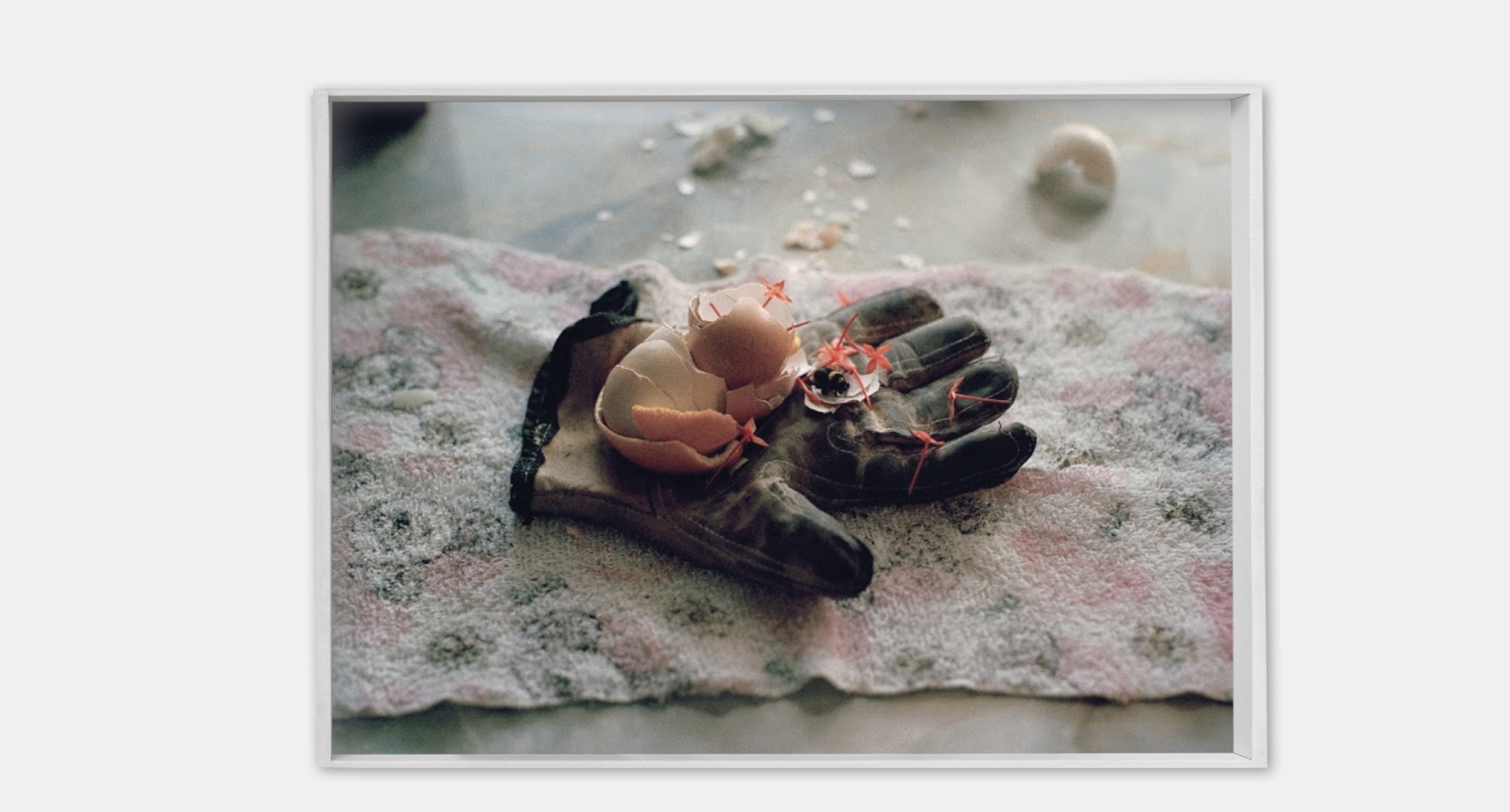
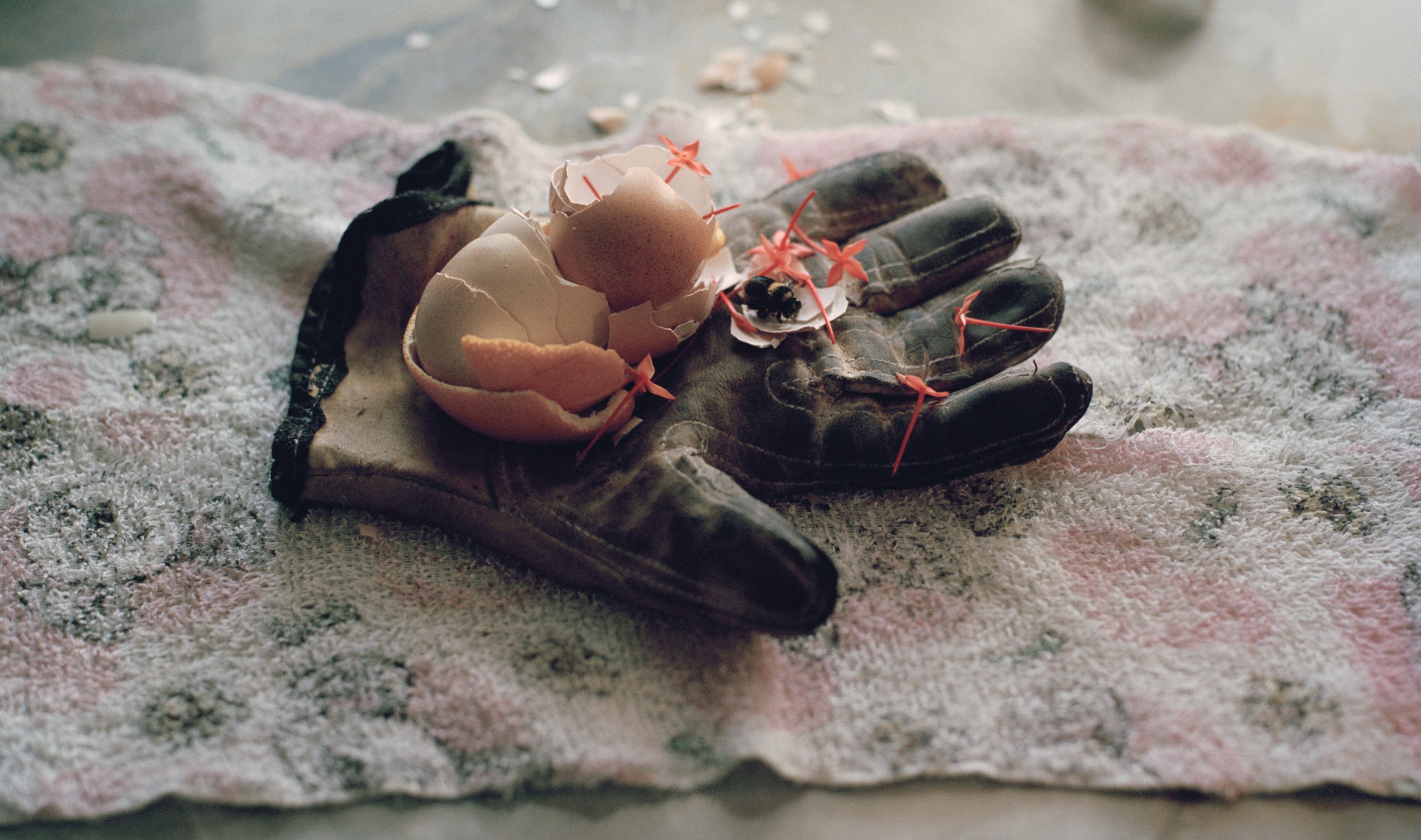
In the salon, echoing “L’Heure fauve”, Pierre Dumaire’s first solo exhibition presented in the main space, DS Galerie presents a new Aparté bringing three works into dialogue: a polyptych by Pierre Dumaire, “L’Homme blessé (Jean-Hugues Anglade) & L’Homme blessé (papier peint)”, 2026; a photograph by Andrés Barón, “Cáscaras, flores y abeja sobre guante”, 2024; and a collage by Peter Marcasiano, “Une rose”, 1981.
Gathered around the motif, these works explore different ways of constructing images from simple and persistent forms—the flower, the still life, the fragment. From one work to another, the motif repeats, shifts, and transforms: as décor in Pierre Dumaire’s work, as trace or imprint in Peter Marcasiano’s, and as both in Andrés Barón’s, where it appears, assembles, and fragments.
Graduated from the Ecole Nationale Supérieure des Arts Décoratifs in Paris (2016), Andrés Barón develops his artistic practice through film, video and photography. His approach establishes a relationship with the image transformed by screens and networks, playing with the spaces of representation. His work has been shown in various venues and exhibitions in France and abroad. DS Galerie devoted two solo exhibitions to him in 2023, one at the gallery “Grammars”, the other at Paris Photo. More info
Trained at the École des Beaux-Arts de Paris, the Akademie der Bildenden Künste in Vienna, and the École Duperré, Pierre Dumaire develops a pictorial practice that explores ambiguous spaces, traversed by latent narratives and a tension between visibility and concealment. Drawing on an iconography rooted in gay visual culture, his work is characterized by the use of painting on silk, silkscreen, and printmaking, lending the works a melancholic and expressive tone.More info
Peter Marcasiano (1921–1984), born in southern Italy and trained in the United States, moved to Europe in the early 1950s before living and working in Paris. He developed a discreet and rigorous body of work, primarily devoted to small-scale still lifes—onions, fish, flowers—painted in thin, quiet layers. Through the repetition of motifs and a muted palette, his painting takes on an almost metaphysical presence. Long kept in relative obscurity, his work is now undergoing a gradual rediscovery. More info