Le salon | “Eleven Planets of UltraBride_OnlineDrift_Core”
Exhibition
27.03.2025 — 03.05.2025
Liên Hoàng-Xuân
Opening
27.03.2025 — 17h
Perhaps the best way to understand what emerges from Liên Hoàng-Xuân’s work is to take a diversion into the poetry of Mahmoud Darwich. In Onze astres sur l’épisode andalou, the Palestinian poet, to whom the artist pays tribute in the title of her exhibition, depicts Andalusia as a lost paradise whose fall in 1492 is experienced as mourning. The evocation of this loss is treated in an atmosphere of collective lament, a legacy of pre-Islamic poetry in which we cry over the vanished camp, the destroyed house, and the territory that is no longer ours. In this way, Darwich presents Andalusia as a contemporary poetic tool for rethinking threatened spaces, destroyed identities and replaced cultures.
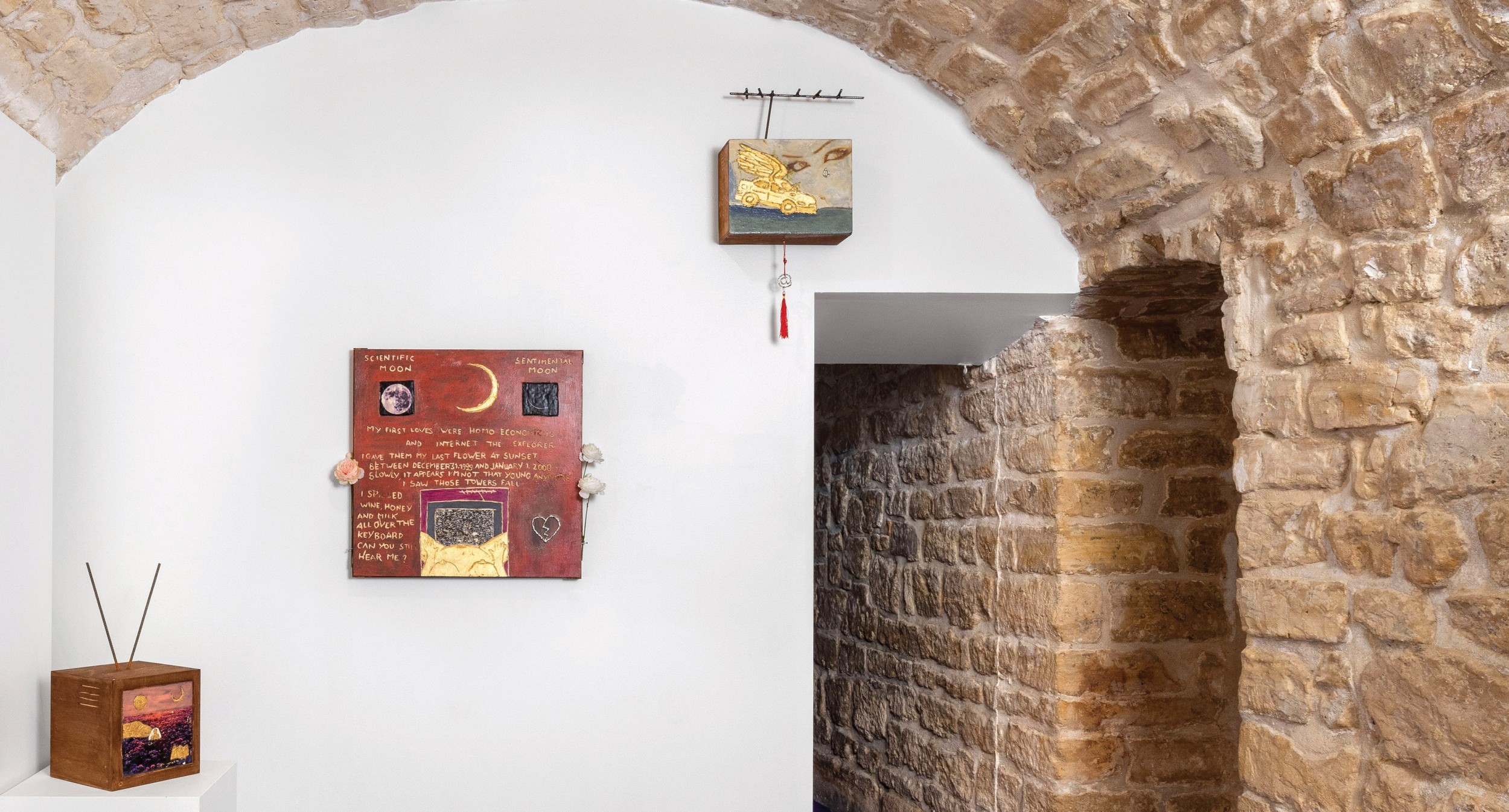
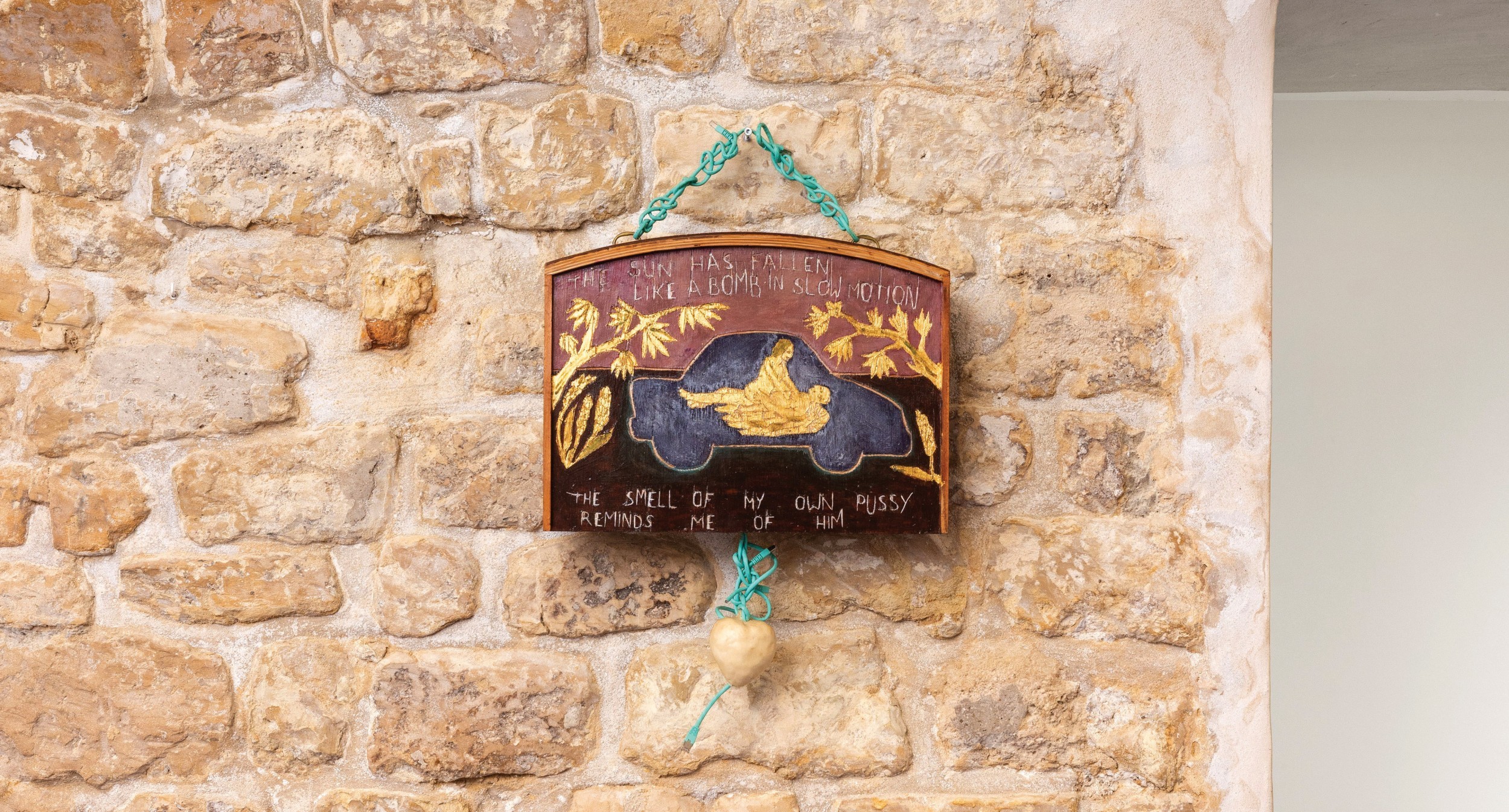
It is around this same idea of the collapse of an empire and the fall of a historical era that Liên Hoàng-Xuân’s practice is structured, intimately linked with a form of melancholy and emotion reminiscent of adolescence, A perpetual moodiness that is expressed in prose inspired by the Persian poetry of Hafez, courtly poetry and paranoid commentaries and legends gleaned from the Internet and preserved in a collection of screenshots by the artist. For Liên Hoàng-Xuân, the fall is embodied by the transition to the next century, the next millennium, the changeover from December 31st 1999 to January 1st 2000, a twilight period that gives the impression that there is no longer any signal, that the television screen has remained blurred. It’s the beginning of the millennium, and the West, catastrophe after catastrophe, declines as it produces more and more, until it comes to its own end. For “Eleven Planets of UltraBride_OnlineDrift_Core”, the artist draws a link between Darwich’s poetry and Shumon Basar’s contemporary research into the concept of endcore, ‘the era after the end of eras’, this collective impression of a threatening end, the consequence of an exacerbated capitalism that no longer has the time to produce worlds, but which generates aesthetics and micro-trends with the suffix - core (girlcore (1), 2000’s core (2), arabian driftcore (3)..). It is from this language and these imaginary worlds generated by capitalism that Liên Hoàng-Xuân’s work is structured, accompanied by a nostalgic sentimentality.
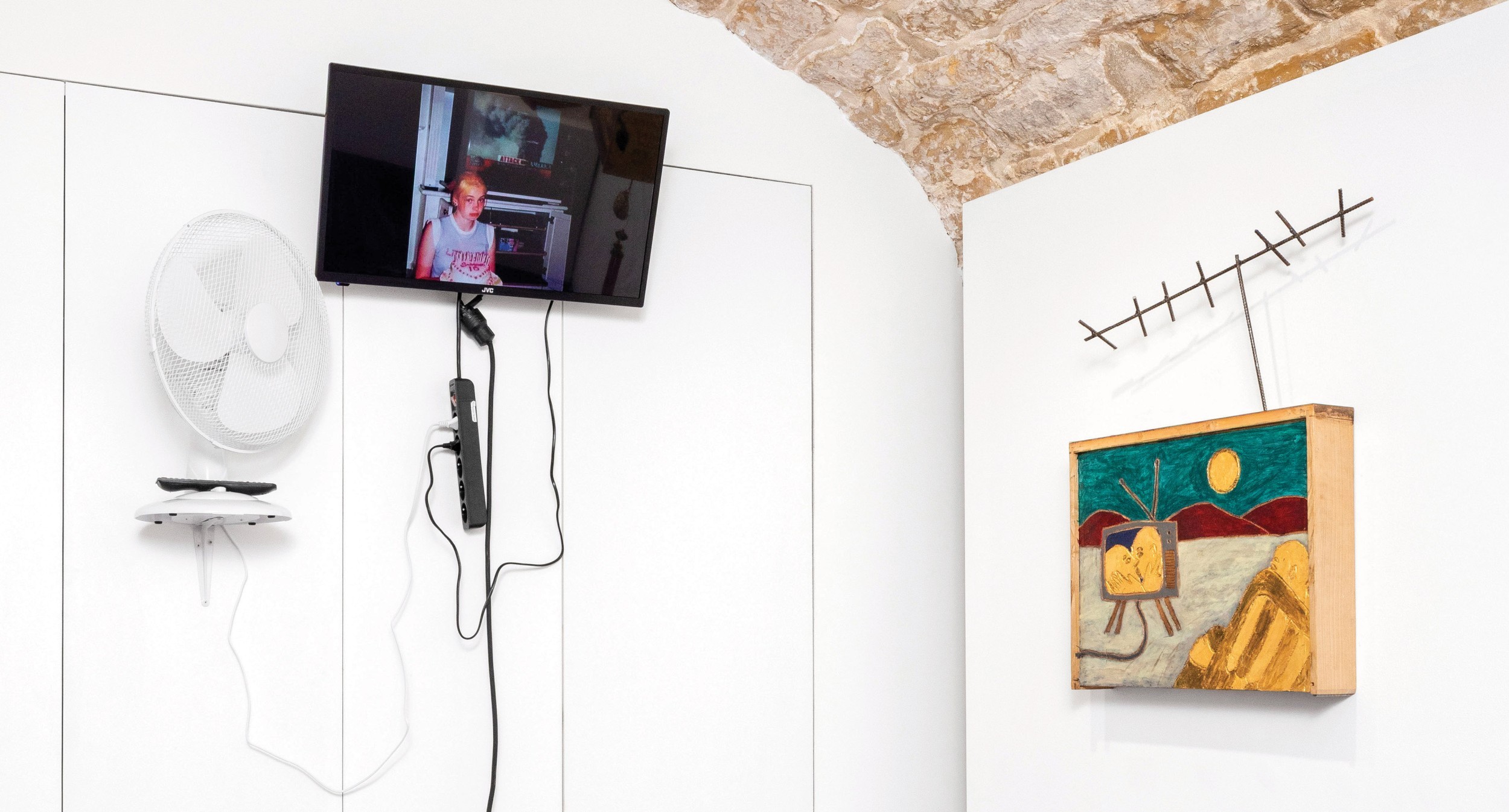
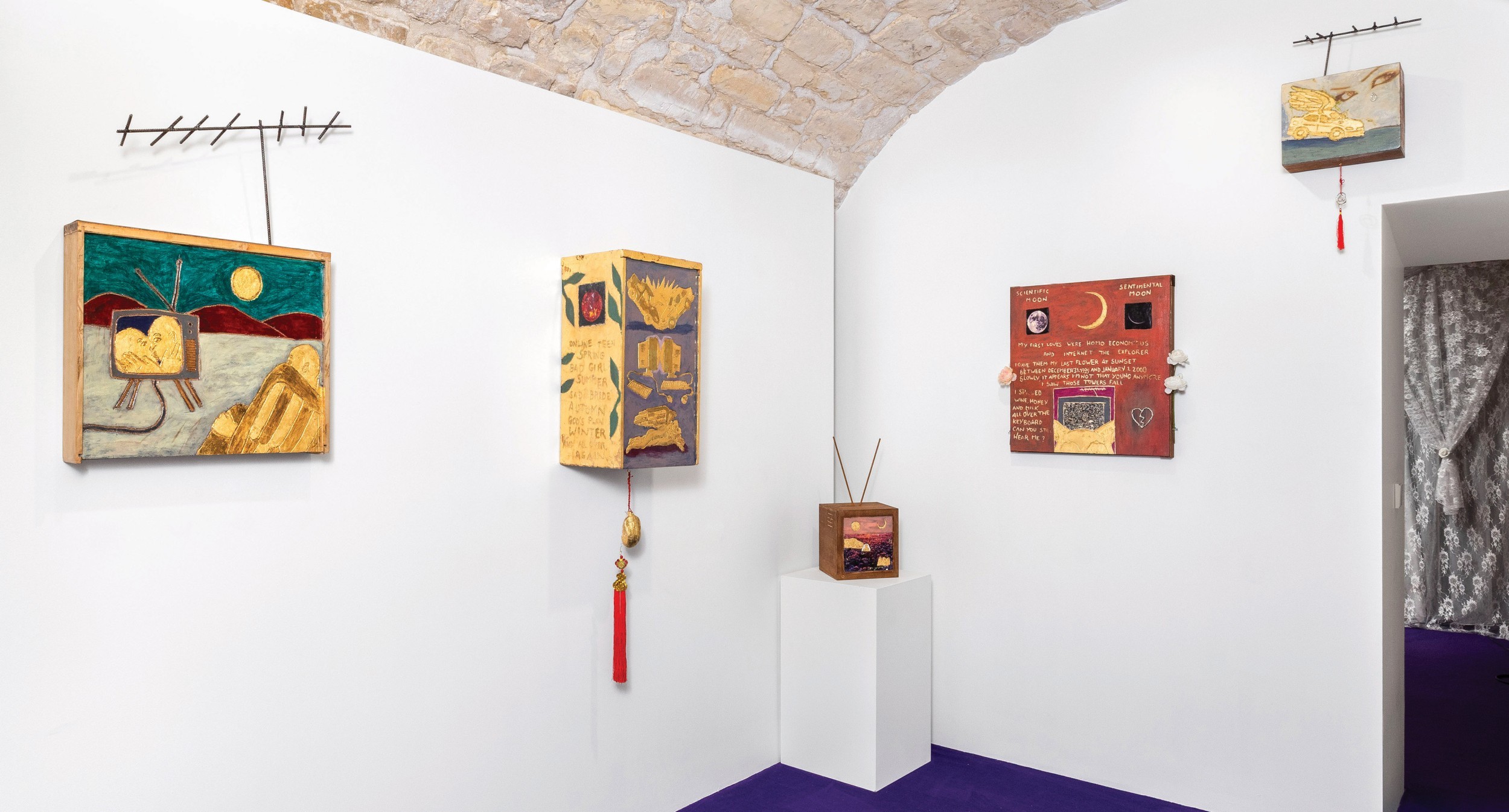
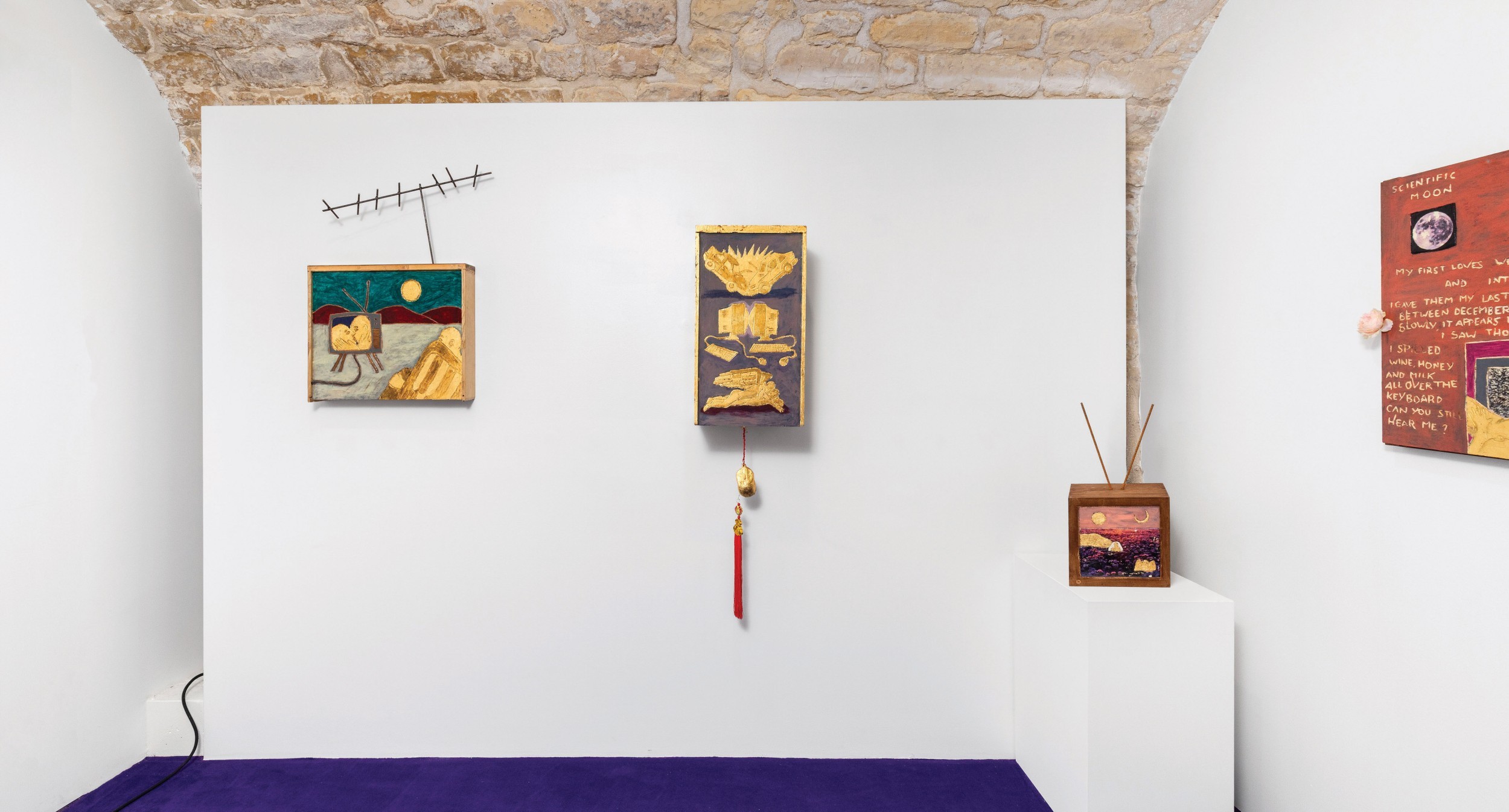
The wandering of the nomadic poet takes place in a new desert, that of an infinite digital territory, unlimited in its borders, an eternal continuum, a non-place that doubles the real, haunts it, absorbs it into its substance and displaces it into a virtuality capable of feeling. Liên Hoàng-Xuân’s installations contain numerous references to this digital world (televisions, mice, aerials, tin arobases, etc.) whose presence does not refer to any particular functionality, but rather asserts itself in an ornamental gesture that recalls both the ramifications of cables characteristic of the landscapes of large non-Western cities and the narrative potential of digital stories, somewhere between conspiracy and eschatology.
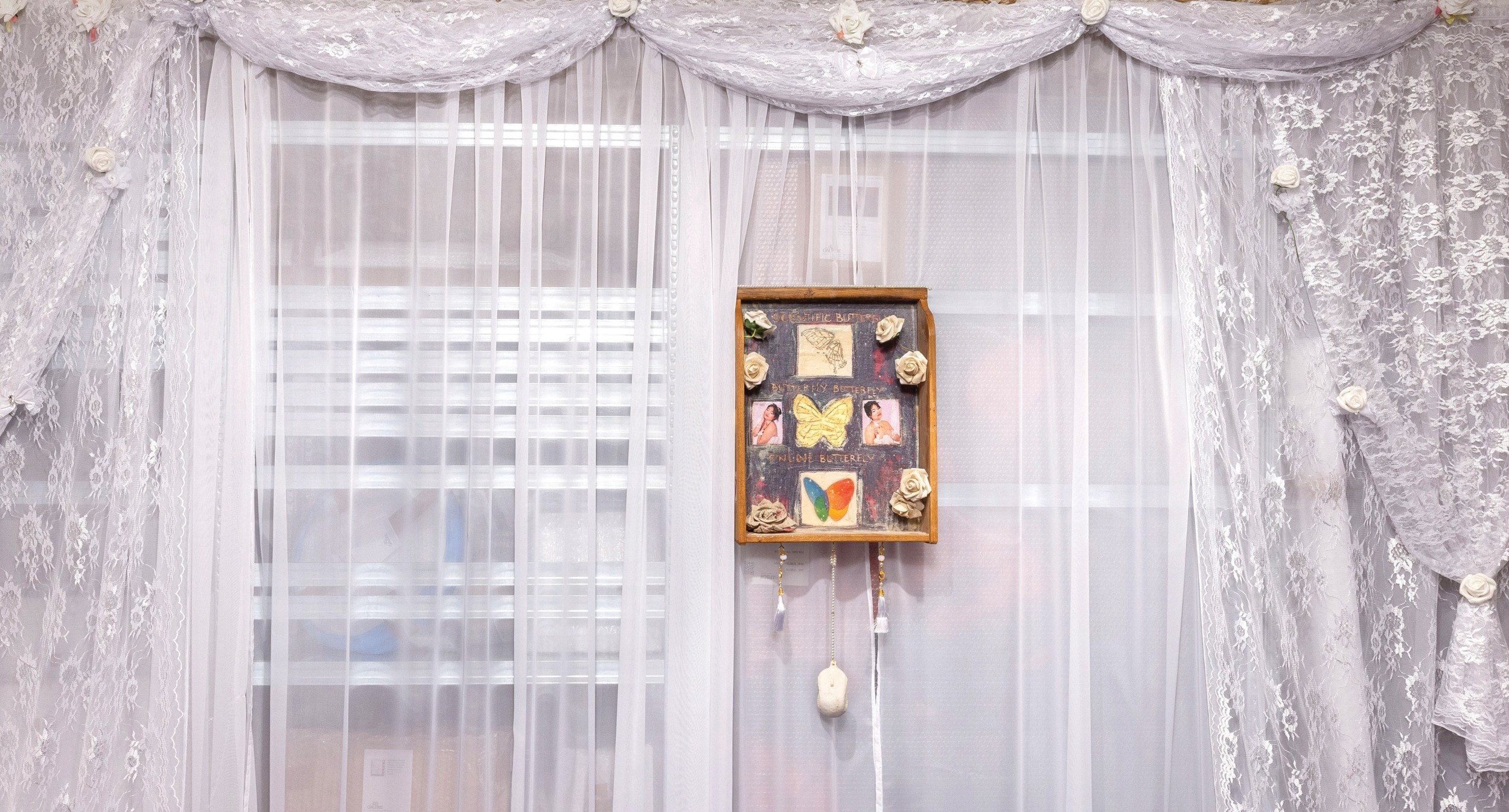
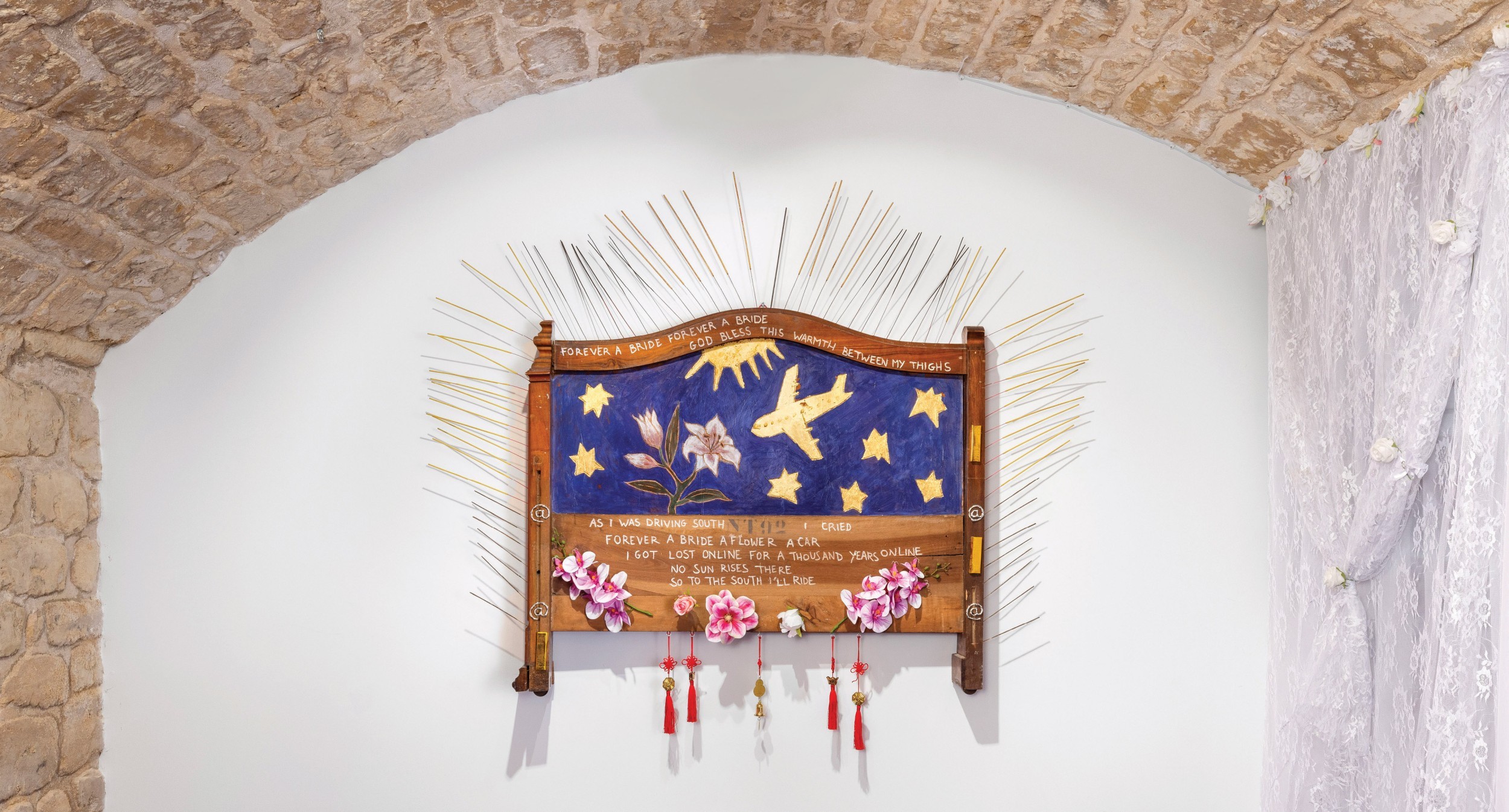
And amidst this profusion, it is the figure of the bride that takes pride of place, thought of as a lyrical archetype that goes beyond gender, manifesting itself in its transitory dimension: the bride on the eve of the ceremony, a status that is nonetheless ephemeral but that transforms her forever into another creature, like the butterfly in Bridal Ontology that, from chrysalis, metamorphoses into the logo of a now obsolete instant messaging service.
The bride, the angels, their eroticism and their embraces are all disorientated figures that appear in Liên Hoàng-Xuân’s work on drawers or headboards, supports that refer to the intimate, to the nuptial universe, to what is preserved against oblivion, and that seem to tell us that, despite virtuality, desire, lyricism and sentimentality resist in an incompressible way; that the fall of the West offers us the chance to rethink the world, to write a free cosmopoetic script in which the penumbra of the eclipse offers refuge from the light of imperialism, and NASA scientific images stand alongside the last sunset of the century over New York; and that, finally, on the last evening on this Earth (4), there will be nothing left but poetry to tell our story.
—
(1) Internet aesthetic made up of things that could be considered typically “feminine”.
(2) Internet aesthetic based on fashion from the early 2000s.
(3) Internet micro-trend that combines images of cars doing a ‘Saudi drift’ in the desert in the foreground with women’s eyes superimposed in the background.
(4) “On the last evening on this Earth” is the name of a poem by Mahmoud Darwich from the collection Eleven stars on the Andalusian episode (1992).
Text by | Juliette Hage
Liên Hoàng-Xuân is a Franco-Tunisian artist who graduated from the Lebanese Academy of Fine Arts in Beirut (2020) and the Beaux-Arts de Paris (2022). Her multifaceted practice (sculpture, video, printmaking, painting, etc.) examines how global history—particularly colonial history—shapes individual and emotional trajectories.
Drawing on a geographical imaginary that brings together the landscapes of Tunis, Saigon, and Beirut into a single hybrid fictional zone that the artist calls the “South of Nowhere,” she intertwines narrative and figurative devices. More info
Contemporary Art Library, March 2025
Eleven Planets of UltraBride_OnlineDrift_Core, Liên Hoàng-Xuân at DS Galerie
www.