
Solo show | Clément Bataille
Exhibition
10.04.2026 — 16.05.2026
Lama Sabachthani
Opening
10.04.2026 — 17h
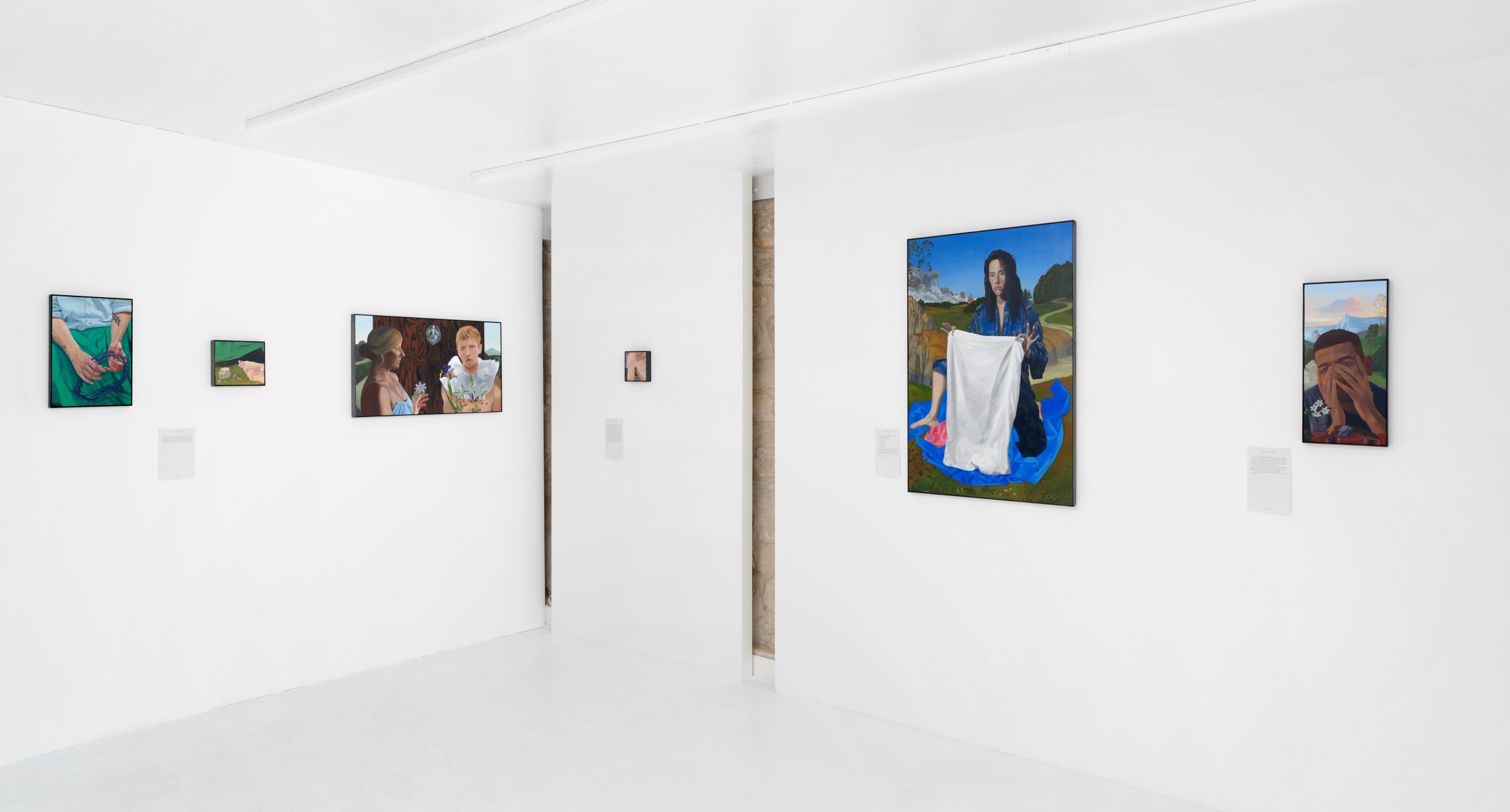
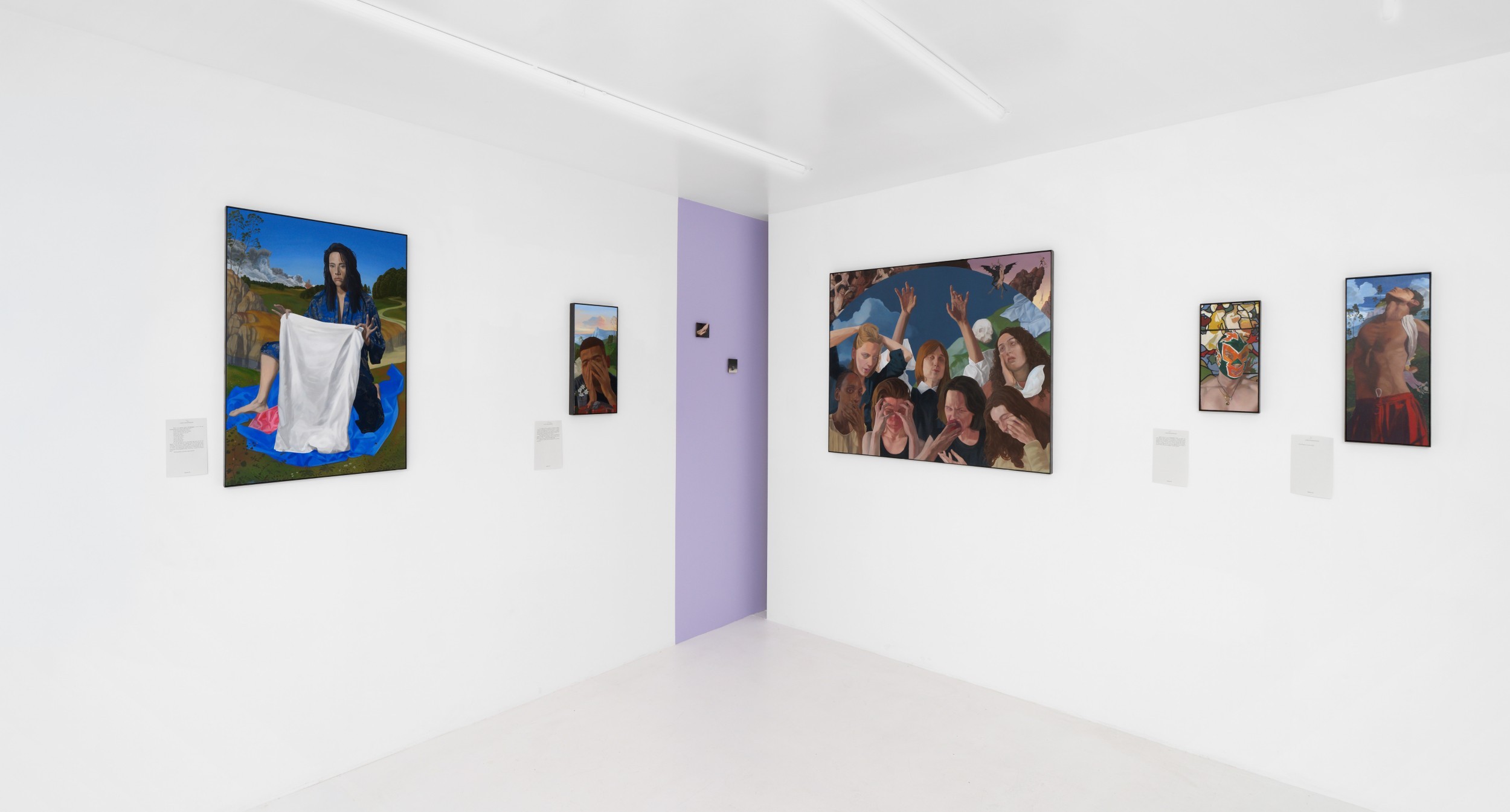
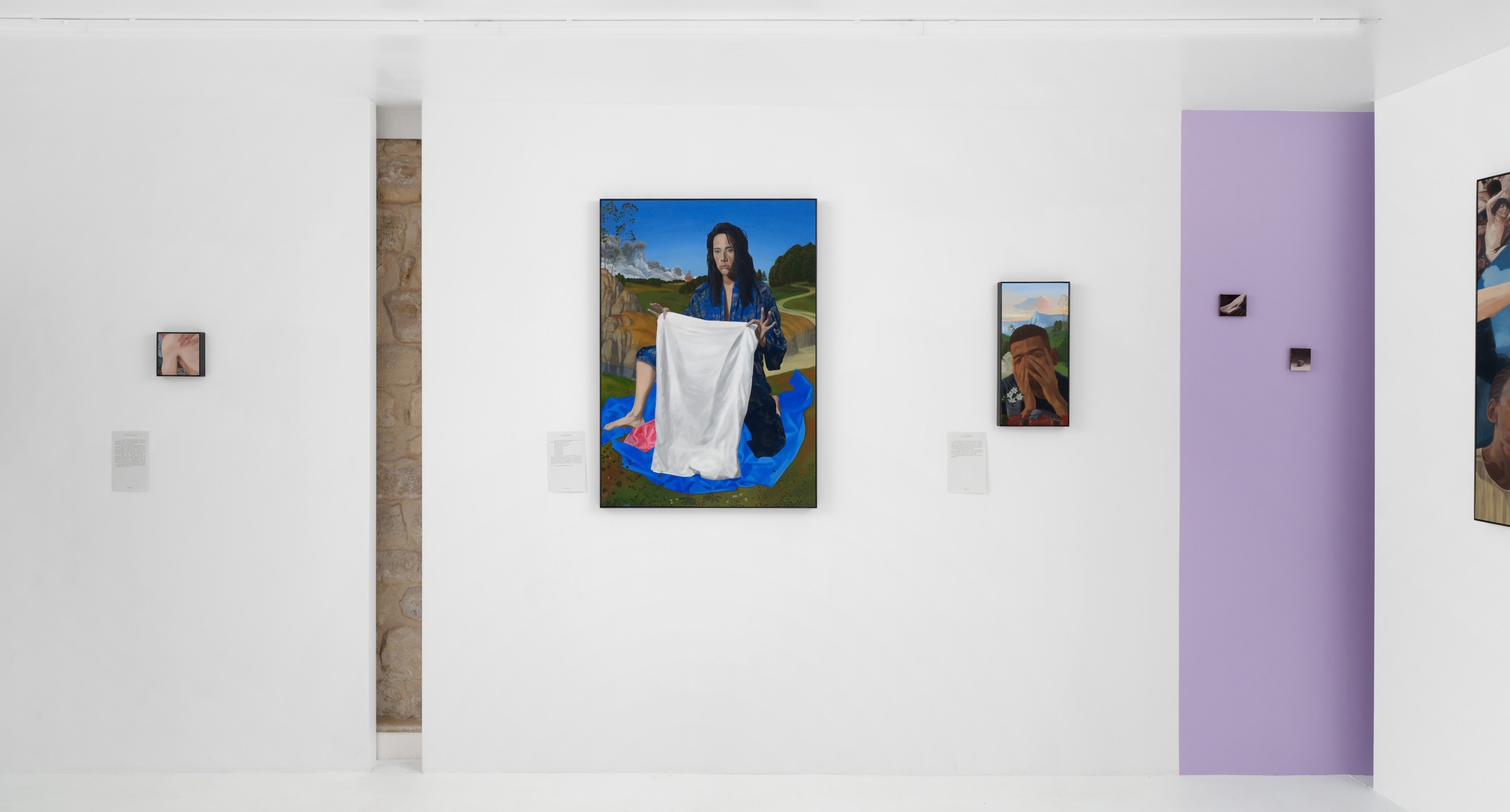
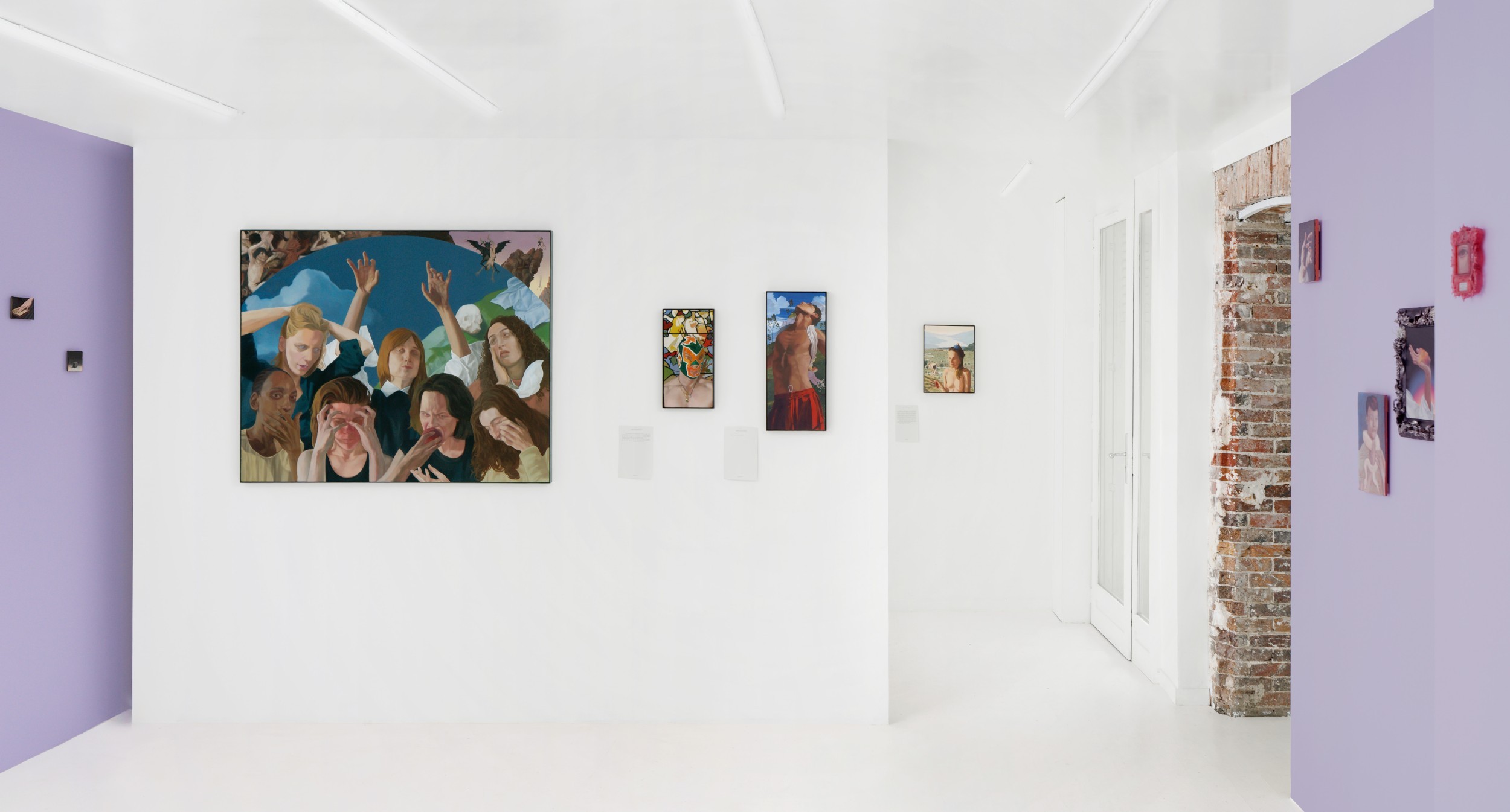
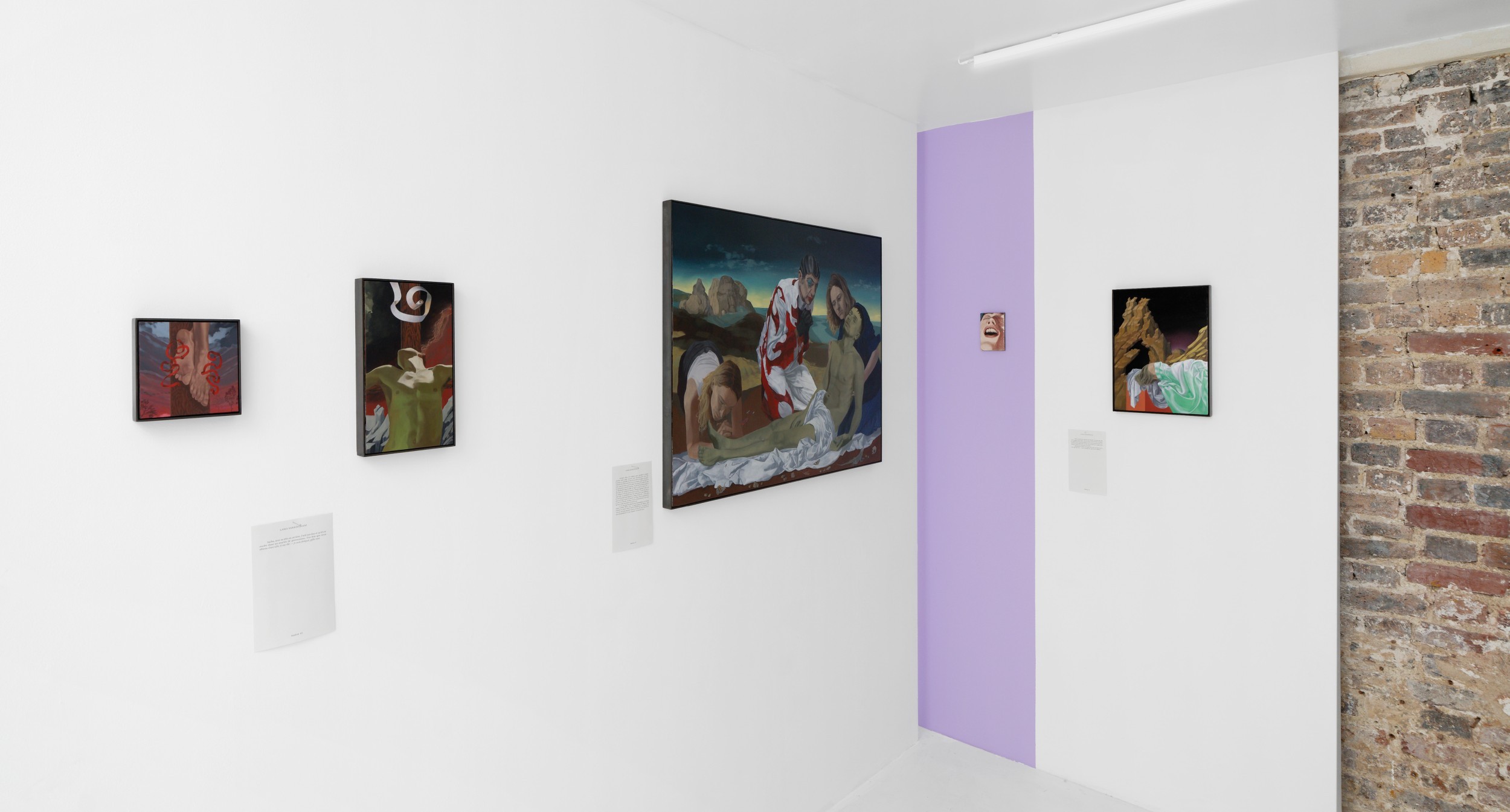
Lama Sabachthani are the last words attributed to Christ: “Why have you forsaken me?” (1). The climax of the Stations of the Cross—whose sequence the exhibition retraces—they mark a turning point, the moment when abandonment is spoken. Kept here in their original form, they remain open, detached from their religious context, like a suspended incantation without a clearly defined addressee.
Perhaps they do not call for an answer.
Perhaps they simply say: stay with me.
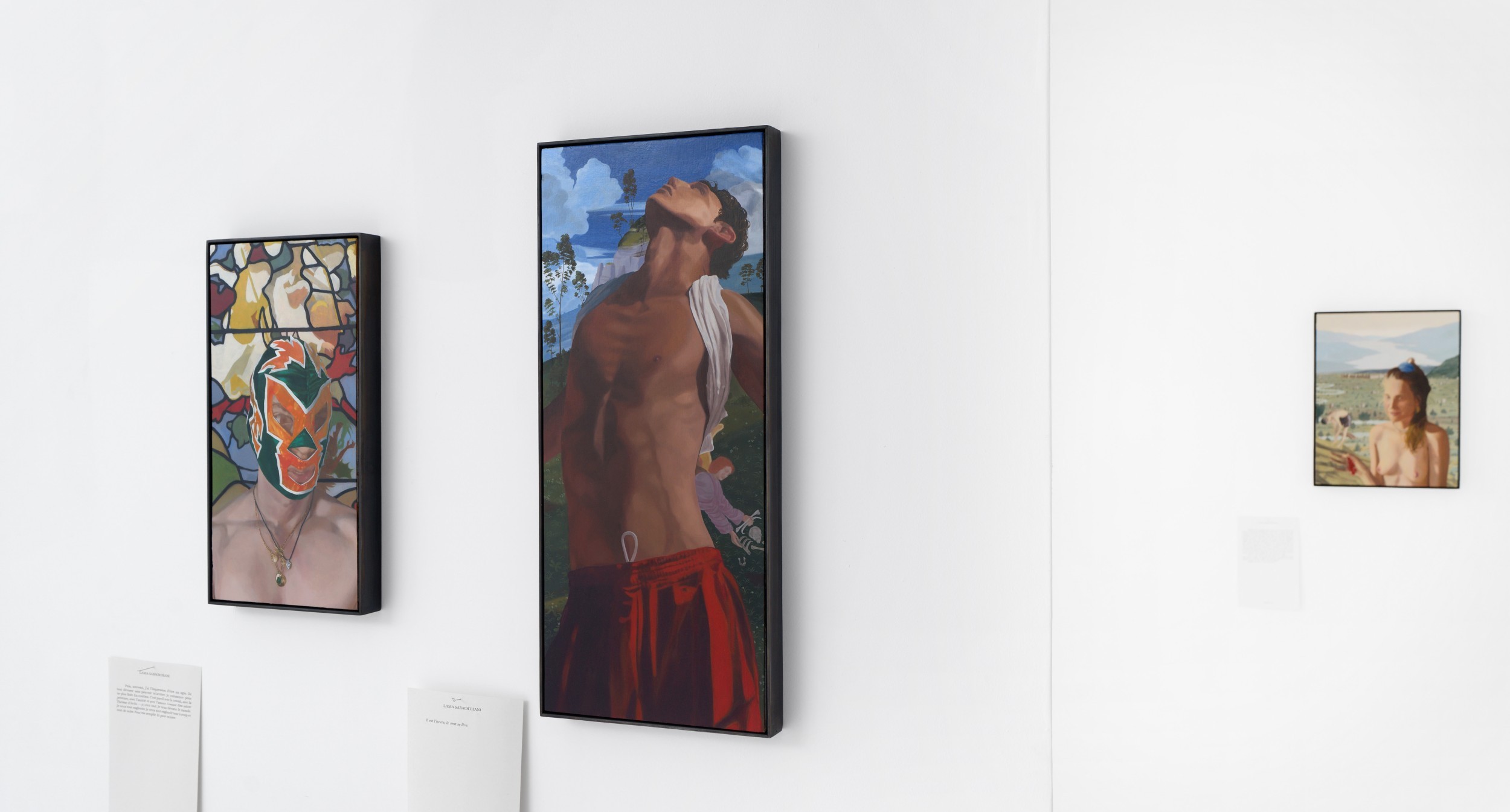
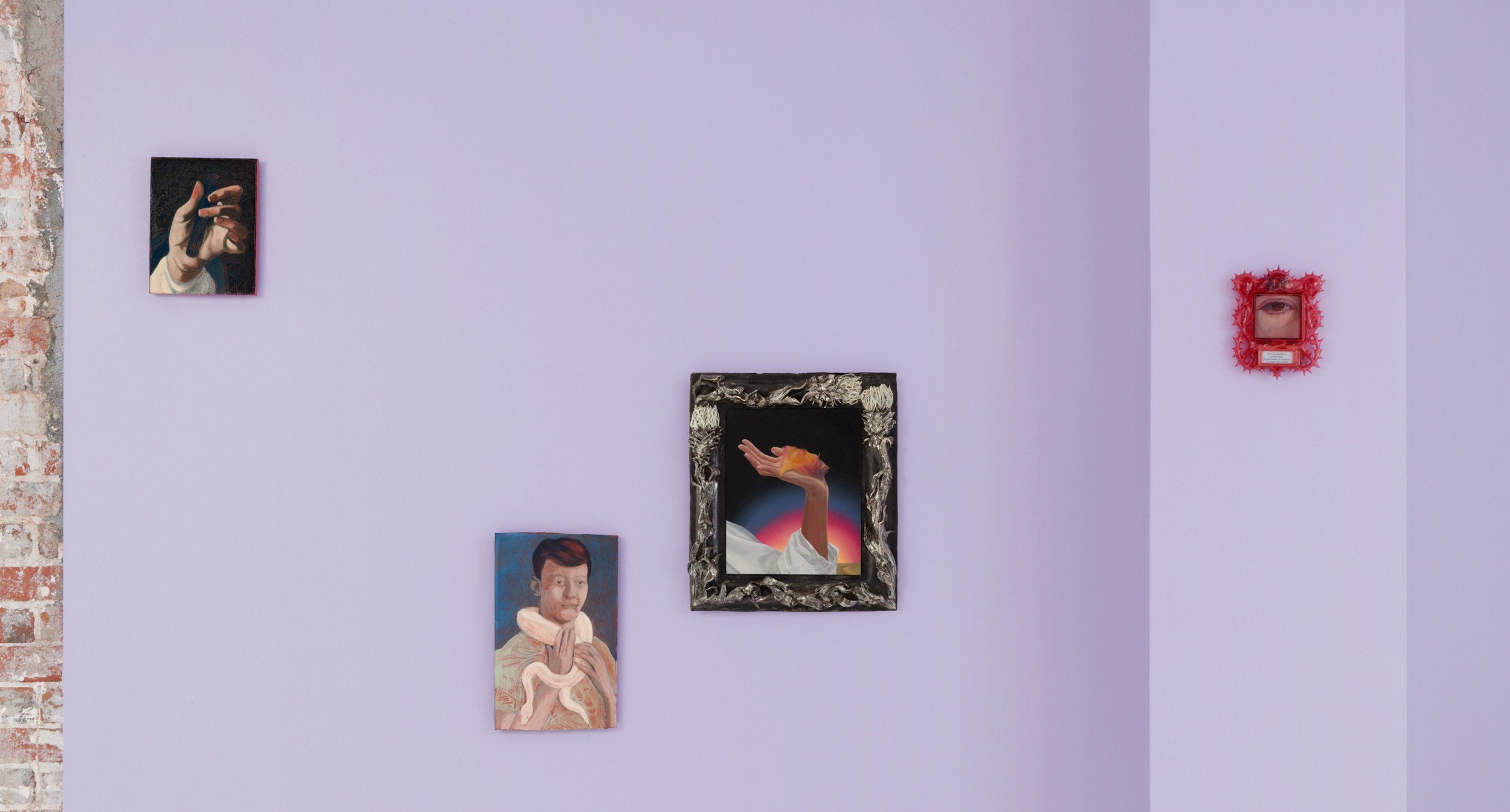
There are tears in the paintings, but they do not serve to emphasize anything. They appear on the surface of faces, like something that emerges without settling, that holds for a moment before shifting. It is not entirely clear to whom they belong: to the figures, to those who look at them, or to what circulates between the two.
They are like mirrors.
One might almost see oneself in them.
But never quite.
Last summer, with Clément, we watched The Stendhal Syndrome, Nan Goldin’s latest photographic film. At the beginning of the projection, she says: “In the silence of the museum, I found the faces of my friends.”
A tear ran down her cheek.
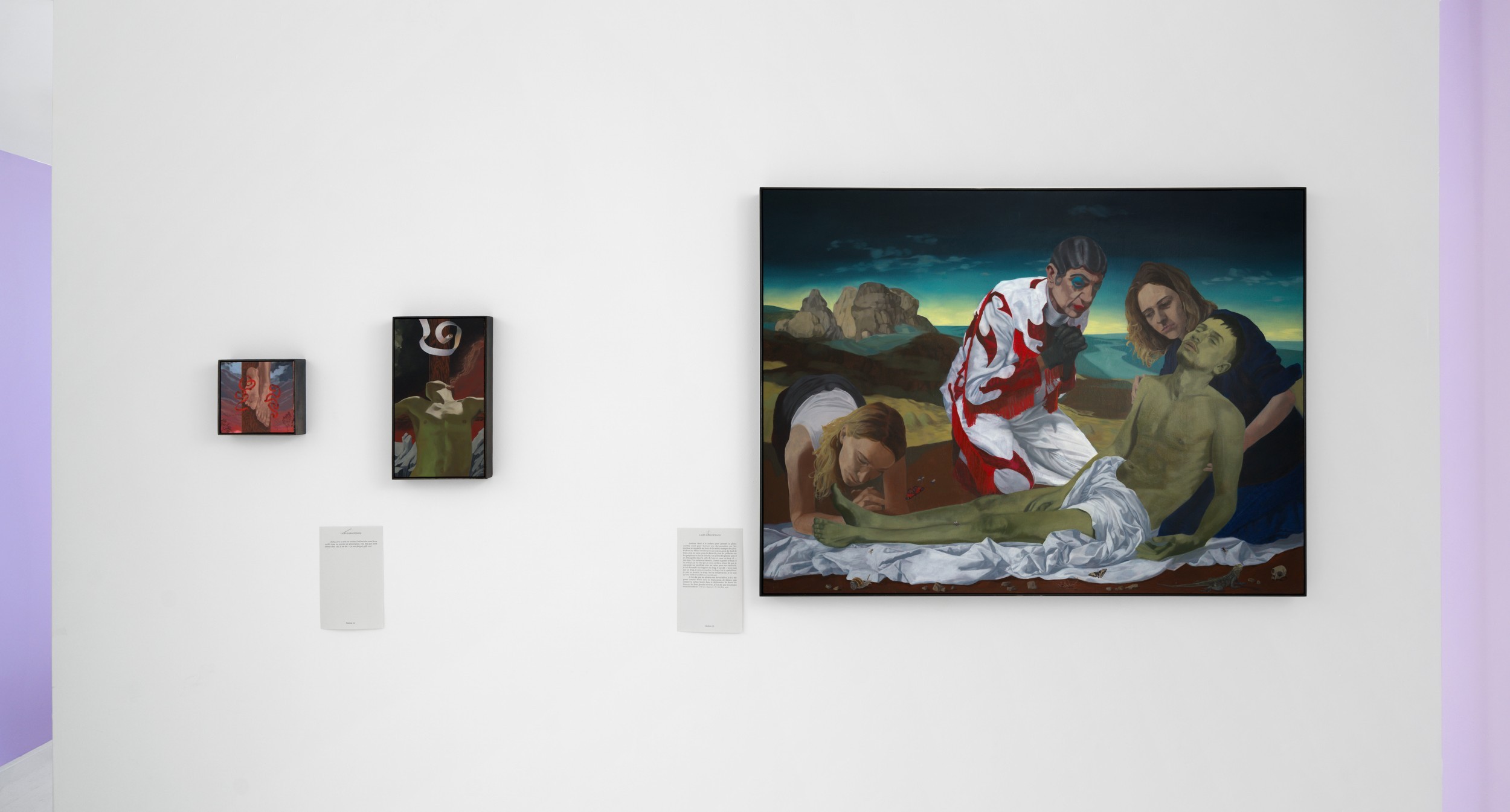
These are his friends that Clément Bataille paints. Not to represent them, nor to fix them, but because everything begins there—with these bonds that hold without guarantee, that shift, sometimes unravel, yet continue nonetheless to engage. Bringing them into his paintings, having them re-enact these scenes, is not about extending an existing story. It is about displacing it, letting it pass through them, through what connects them.
Clément Bataille places them in relation. He has costumed them, lit them, photographed them, or simply received their way of being there with him. And then himself, among them. This is neither a staging of the Stations of the Cross nor a pastiche, but an embodiment of what remains: gestures. The simplest, the most exposed—falling, rising, meeting a gaze, being helped, being humiliated, being naked, being seen, and then dying. Through these gestures, one also senses his attachment to 15th- and 16th-century painting—Giovanni Bellini, Pietro Perugino, Pieter Bruegel the Elder—not as models, but as ways of looking at bodies and allowing them to appear.
To look at them with love is not a posture. It is a commitment. A way of sustaining bonds that rest on no certainty, that are neither protected nor stabilized—something that exceeds the image. As Hélène Giannecchini writes: Friendship is political; it makes us want to invent other ways of living; it does not render us docile.” What takes shape here belongs to that radicality: a community without a model, without assignment, built directly through bodies, in a form of soft yet irreducible resistance (3).
Yet the figure of Christ does not disappear. It becomes multiple, unstable, traversed. No longer a model to follow or an ideal to attain, but a disseminated presence—exposed, vulnerable, at times wavering. It is shared. In Clément Bataille’s work, it recomposes itself as it circulates. It resides in what it means to exist in exposure, as a minority, yet carried by a collective force: a queer and dissident figure.
To remain exposed is also to resist despite the weight of the social gaze—a gaze that presses, that expects, that demands. In The Swimmer(4), a man swims across the pools of his neighbors in an affluent American suburb to return home. He moves forward as if everything could still hold together. But as he progresses, pool after pool, something gives way. What he believed he could sustain unravels. The journey, like a Stations of the Cross, leads to nothing but this: the collapse of a fiction upheld by capitalism. Painting demands time. It slows down, resumes, endures. Gestures lose their function within it. They no longer prove anything, no longer produce anything. Painting thus becomes a counter-power. This is how something resists. And to paint them is also to keep them—to hold them a little longer, without ever being able to contain them.
Perhaps this answers nothing.
It simply holds there: staying with them.
—
(1) Matthew 27:46 and Mark 15:34
(2) Nan Goldin, The Stendhal Syndrome, photographic slideshow, 2024. Quote from the voice-over.
(3) Hélène Giannecchini, Un désir démesuré d’amitié, Paris, Éditions du Seuil, 2023.
(4) The Swimmer, directed by Frank Perry, United States, 1968.
Text by | Thomas Havet
Clément Bataille develops a practice between painting and ceramics, informed by art history and permeated by a sacred that is both carnal and ambiguous. His figures, poised between religious memory and contemporary mythologies, form tense, fragmentary images in which the material itself becomes time. More info